

Gem Encyclopedia
Amazonite: The Blue-Green Stone of the Amazons
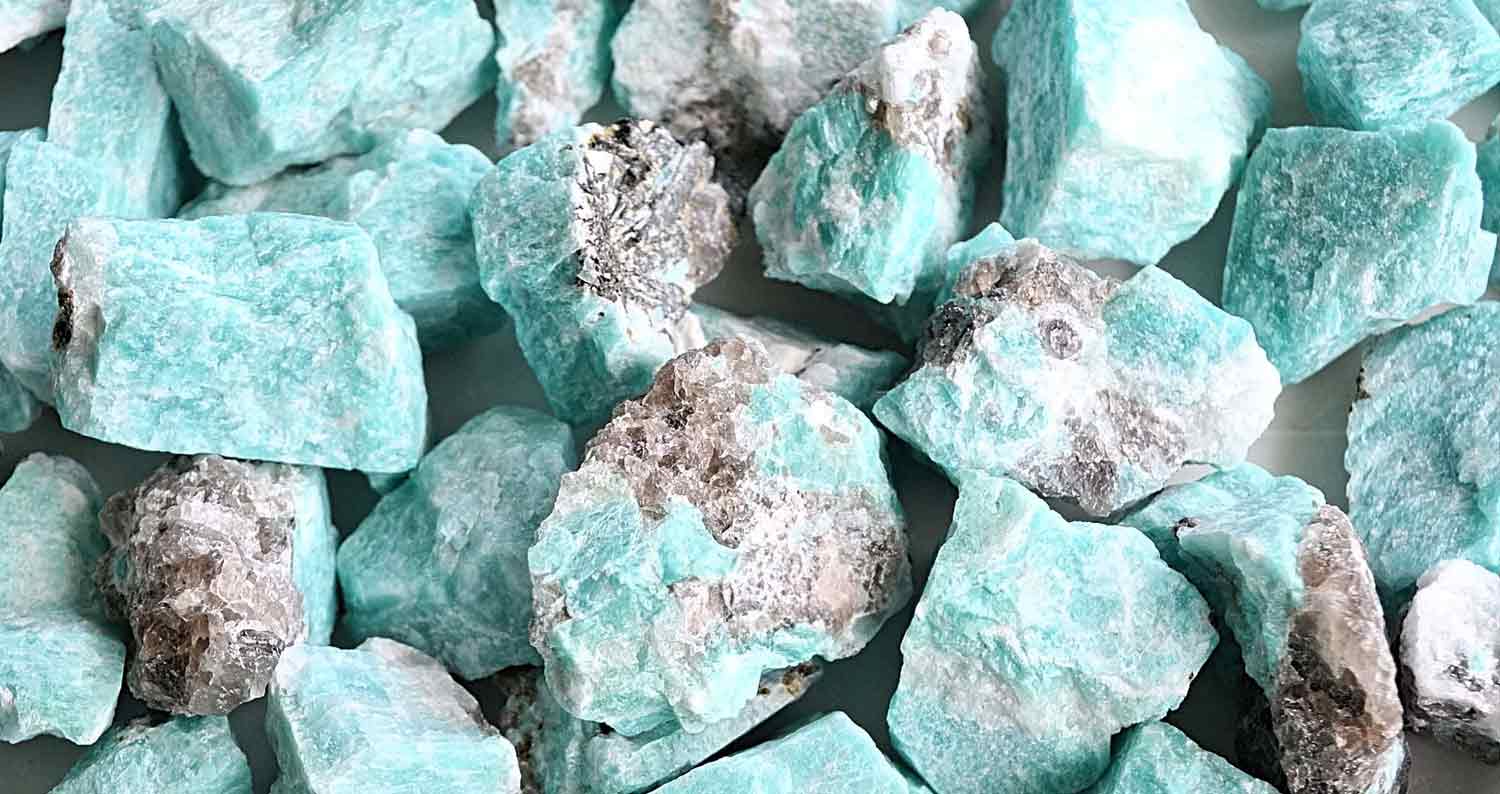
In brief. Amazonite is a feldspar — the blue-green variety of microcline — and its color comes from lead present in the crystal lattice. Hardness 6–6.5, but with two cleavage planes: it chips more easily than its hardness suggests. The name evokes the Rio delle Amazzoni, yet the deposits lie elsewhere; and in the trade it is often confused with turquoise and jade, from which it is distinguished by its grid of white veining.
Amazonite is a gemstone recognized for its intense blue-green color, crossed by white veins that give each stone a unique pattern. It belongs to the feldspar family, the most abundant in the Earth's crust: it is, in a sense, a common stone that had the fortune of being born in a rare color.
Composition and Physical Characteristics
- Composition: microcline, potassium feldspar (KAlSi₃O₈)
- Color: blue-green, due to traces of lead in the structure, with white veins of albite
- Hardness: 6–6.5 on the Mohs scale
- Cleavage: perfect in two directions — this is the stone's weak point
- Luster: vitreous, slightly pearlescent on cleavage planes
The Name That Misleads
The name evokes the Rio delle Amazzoni, yet amazonite is not found in Amazonia: the main deposits are in Russia (Ilmen Mountains), Madagascar, Brazil — but not in the Amazon basin — and the United States (Colorado, where it occurs alongside smoky quartz in associations highly prized by collectors). The most widely accepted theory is that the name derives from green stones brought back from South America in the 18th century, which were most likely jade or nephrite.
How to Tell It Apart from Turquoise and Jade
- From turquoise: amazonite has sharp white veins, often in a grid or parallel stripes, while the matrix of turquoise is brown or black and branching. Amazonite also shows flat, glossy cleavage surfaces where it has chipped; turquoise does not, because it is microcrystalline.
- From jade: jade is far more tenacious — it does not chip — and has an unctuous, almost soapy luster. Amazonite is cooler and more glassy.
- From glass: glass color is uniform and air bubbles are often visible; amazonite always has a banded structure.
Treatments
High-quality amazonite requires no treatment, but on more porous commercial material, waxing and resin impregnation are used to even out the surface and enhance the color. This is a common, stable, and legitimate practice that must be disclosed; however, the wax is sensitive to heat and solvents, and may dull over the years.
How to Care for It
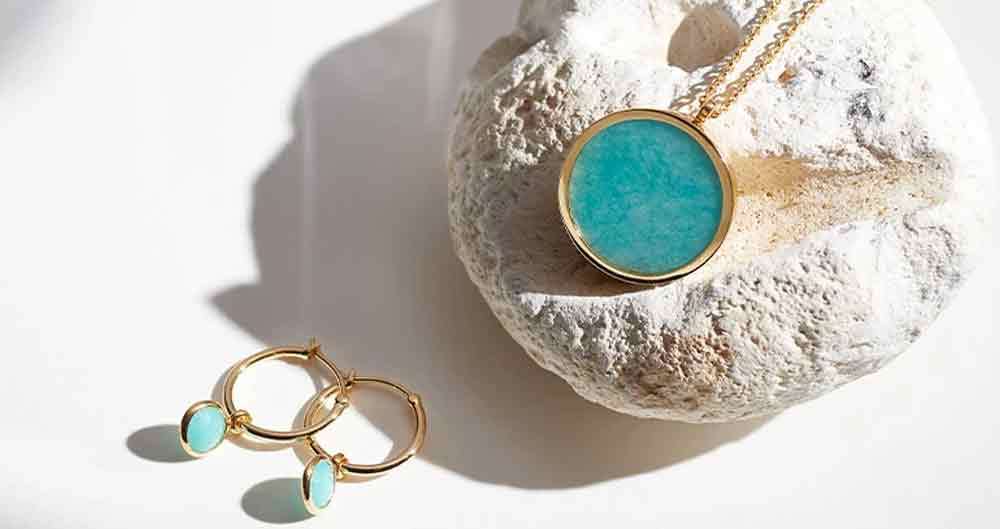
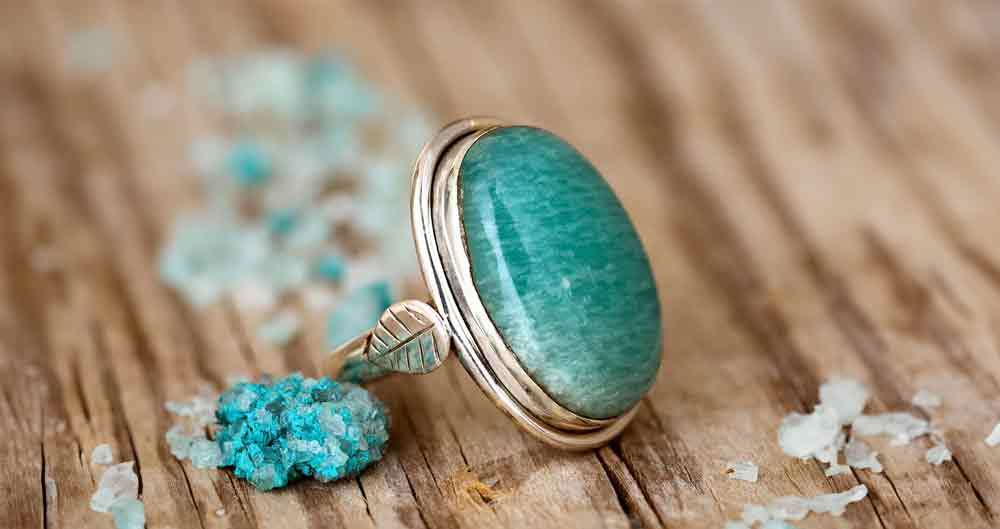
Lukewarm water and mild soap, soft cloth. 🔴 Ultrasonic cleaners should be avoided: the vibrations work along the cleavage planes and, on waxed stones, can also strip the treatment. Store separately from harder gemstones. In a ring, a bezel setting is preferable: this is a stone that does not handle edge impacts well.
History
Amazonite is one of the oldest ornamental stones: beads and amulets in amazonite have been found in Egypt — they appear among funerary goods as well — and in Mesopotamia. In ancient civilizations, blue-green was a prized color because it evoked water and vegetation, and stones that displayed it were almost always considered auspicious.
Frequently Asked Questions about Amazonite
- Does amazonite come from the Amazon?
- No. The deposits are in Russia, Madagascar, Brazil (outside the Amazon basin), and the United States. The name arose from a confusion with other green South American stones.
- Does the color fade?
- It can, with prolonged exposure to direct sunlight and heat: the blue-green of feldspars is not among the most stable. Avoid keeping it near windowsills.
- Can it be worn every day?
- In a necklace or earrings, yes. In a ring, it is worth careful consideration: with a hardness of 6–6.5 and perfect cleavage, daily impacts will show.
Continue Exploring
Craft, guides and new arrivals
Subscribe to receive the stories from our magazine, our buying guides and a selection of pieces chosen by our goldsmiths and watchmakers.


