

Gem Encyclopedia
The Meaning of Colors in Gems: History and Symbolism
In brief. Every gemstone color carries a precise tradition: the red of the rubino for courage and protection, the green of the smeraldo for rebirth, the blue of the zaffiro for wisdom, the white of the diamante for purity, the violet of the ametista for clarity of mind. These are historical and cultural readings — chakras, planets, birthstones — not therapeutic promises. And when you buy, color matters in a gemological sense too: hue, tone, and saturation determine much of a stone's value.
The idea that a color holds power is as old as human history. Long before gemology existed, stones were chosen for their hue: red was blood and fire, green the returning vegetation, blue the sky and therefore the divine. Those who could afford it wore that color on their body, in lasting form, so it would stay with them.
Here we lay out the traditional associations color by color — with the gemstones that embody them, the chakra and planet tradition has assigned to each — and then the practical side: how to truly evaluate a color when you're about to choose a stone. The two things don't contradict each other. A gem chosen for its meaning still needs to be beautiful, and the beauty of a colored stone is almost entirely in its color.
Where the idea that a color holds power comes from
The correspondences you read about didn't all arise at once. Some come from the Indian tradition, which links stones to the seven chakras — the energy centers arranged along the body from the base of the spine to the crown of the head. Others come from Hellenistic and medieval astrology, which assigned each planet a metal and a range of colors. Still others are simply history: the rubino was the "king of gems" in ancient India, medieval knights had it set into their armor as battle protection, and bishops wore the ametista on their ring finger.
Telling them as traditions is the honest way to tell them. No stone cures anything, and anyone who promises otherwise is selling you something else. But knowing why, through the centuries, one color was chosen over another changes the way you look at a piece of jewelry — and often helps you understand which color you truly want to wear.
Red, orange, yellow: the warm colors
Red is passion, courage, vital energy. The rubino, the "king's stone," is the red gemstone par excellence, symbolizing strength and determination; the granato, with its deep nuances, was a stone of protection and travel; corallo rosso, tied to the Mediterranean and worked for centuries in Italy too, was worn to ward off danger. Tradition associates red with the root chakra, at the base of the spine, and with the planet Mars.
Orange is the color of enthusiasm and creativity: corniola, topazio imperiale, opale di fuoco. It is the color of the sacral chakra and the planet Mercury, and in ancient writings was described as restful to the eye.
Yellow is the color of the sun, mental clarity, and self-confidence: citrino and topazio giallo are the most common gemstones, associated with the solar plexus chakra and, naturally, the Sun. In jewelry, yellow has a practical advantage: it pairs beautifully with yellow gold, which intensifies rather than dulls it.

Green and pink: the colors of the heart
Both are linked to the heart chakra and the planet Venus, and it is no coincidence that these are the colors most often given as gifts.
Green is healing, growth, abundance. The smeraldo, the "stone of success," is a symbol of rebirth and patience: Cleopatra made it her personal emblem, and the Spanish conquistadors, upon discovering extraordinary deposits in South America, flooded the European courts with it in the sixteenth century. Giada carries centuries of Chinese tradition as a stone of purity and good fortune; avventurina, with its inner sparkle, is the stone of confidence and prosperity.
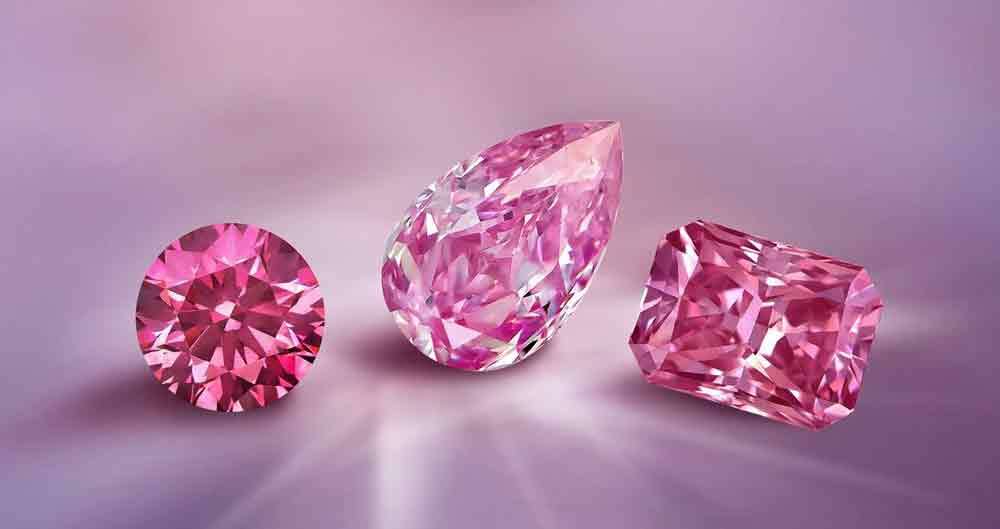
Pink is love, compassion, tenderness. Quarzo rosa is known as the "love stone" and is traditionally linked to self-love before love for others; morganite, with its peachy hues, has become in recent years one of the most sought-after stones for important rings; rodonite, pink veined with black, is the stone of forgiveness and emotional balance.

Blue, indigo, violet: calm, intuition, spirituality
Blue is the color of calm and the right word. The zaffiro was worn by kings for the wisdom it was believed to bestow; acquamarina accompanied sailors; lapislazzuli, ground to powder, was the ultramarine of painters for centuries. Throat chakra; as for the planet, tradition distinguishes: Jupiter for blues tending toward gray, Mercury for lighter blues.
Indigo — blue shading into violet — is the color of intuition and the third eye chakra, between the brows. The gemstones are ametista in its darker tones, sodalite, linked to logical thought and communication, and tanzanite, discovered only in the 1960s in a single area of Tanzania and therefore rare.
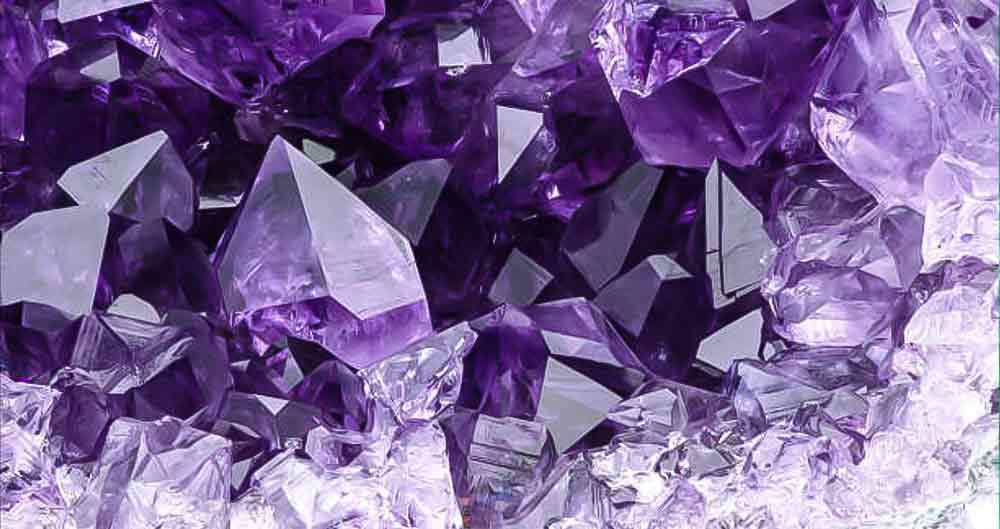
Violet is spirituality and transformation, crown chakra, planet Jupiter. Ametista takes its name from the Greek amethystos, "not drunk": the Greeks believed it protected against intoxication and therefore carved it into drinking cups. In the Middle Ages it was the stone of bishops. Alongside it, sugilite, rare and a deep violet, and fluorite viola, traditionally linked to concentration.
White, gray, brown, black: neutrals that aren't neutral
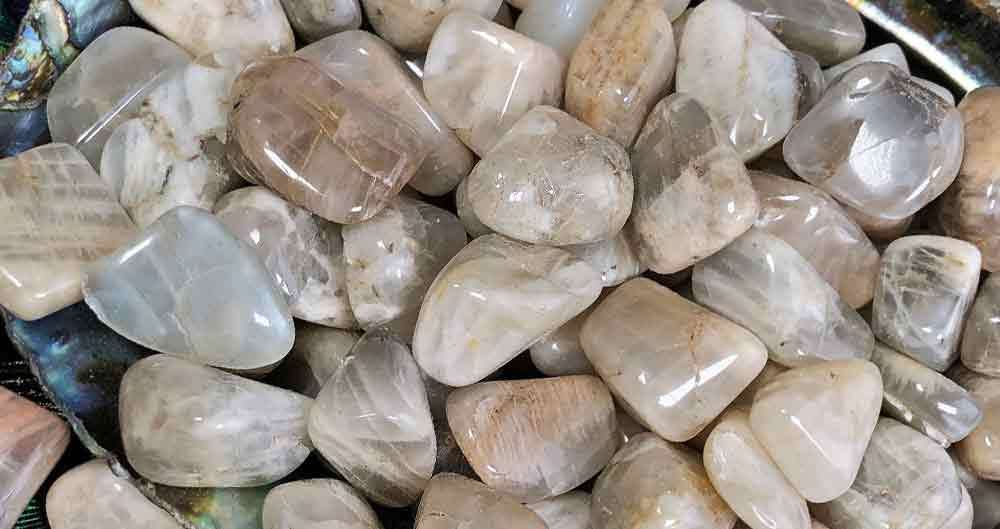
White is purity and clarity, crown chakra, planet Moon. It is the color of the diamante, cristallo di rocca, and pietra di luna with its shifting bluish sheen. The diamante's maximum hardness on the Mohs scale — ten out of ten — made it the natural symbol of what cannot be scratched, and it was on that image that the custom of gifting it as a pledge of commitment took root between the nineteenth and twentieth centuries.
- Gray — gray agata, ematite, quarzo fumé: balance, self-control, grounding. Traditionally bridging the root and crown chakras.
- Brown — occhio di tigre, bronzite, quarzo fumé: stability, resilience, connection to the earth. Planet Saturn.
- Black — onice, tormalina nera, ossidiana: protection, strength, transformation. Root chakra, planet Saturn.
In jewelry these colors have an obvious practical virtue: they can be worn every day, they compete with nothing, and they hold up beautifully against the contrast of white gold and burnished finishes.
Color and the calendar: birthstones and anniversaries
Layered over the symbolism of color is that of the calendar, now codified in the West and used above all for gifts. It's worth knowing, if only to avoid choosing the wrong stone for a birthday.
- Ametista — February.
- Smeraldo — May, and the twentieth wedding anniversary.
- Rubino — July, and the fortieth anniversary.
- Zaffiro — September, and the forty-fifth anniversary.
These are not rules: they are traditions, and like all traditions they can be followed or bent. Someone born in February who loves green will do perfectly well to ask for a smeraldo.
How to evaluate a color when you're about to buy
This is where symbolism ends and gemology begins. In a colored stone, value is determined by three parameters, and it's worth having them in mind before looking at anything.
- Hue: the base color and its secondary components. A zaffiro can be pure blue or blue with a violet or greenish note; a rubino pure red or tinged with orange.
- Tone: how light or dark it is. Too dark and the stone goes flat; too light and it loses character.
- Saturation: the intensity — how vivid and free of gray the color is. This is the parameter that makes the greatest difference of all.
To these add the cut — which in a colored stone serves above all to distribute the hue well, not just to create brilliance — and treatments, which must always be disclosed. Heating of zaffiro and oiling of smeraldo are ancient and accepted practices; other treatments are not. In our Gemstone and Precious Stones Encyclopedia you'll find a profile of every individual stone, from ametista to opale, with everything you need to know before making your choice.
Seeing color in person, in Genova
No photograph truly renders a hue. The same stone changes under a store's lighting, by a window, and in the evening, and how it responds to different lights is part of what you're buying. That's why, when it comes to color, it pays to look at stones side by side and decide with your own eyes.
Our two stores — at Via San Vincenzo 110r in central Genova and at Via Martiri della Libertà 23-25r in Pegli — are both fully stocked: the catalog is divided between the two, so if you're looking for a specific model or stone the quickest thing is to message us on WhatsApp at +39 010 698 1030 and we'll tell you where to find it. Alongside mounted jewelry you'll find loose unmounted stones and collections that make color their central theme, such as Colorati.
Frequently asked questions about gemstone colors
- Do gemstone colors really have an effect?
- What can honestly be said is that they carry a cultural significance documented across millennia and a real aesthetic and emotional effect on the person who wears them. They are not cures or substitutes for anything: they are traditions, and as such they should be presented.
- How do I choose the right color for me?
- Start from two concrete things: your skin tone and the metal you habitually wear. Yellow gold enhances yellows, oranges, and warm greens; white gold and platinum flatter blues, violets, and cool pinks. Then, if a particular meaning speaks to you, follow it.
- Can two stones of the same color be worth very different amounts?
- Yes, and that's the rule rather than the exception. At equal species and weight, tone and saturation can create enormous differences between two stones. That's why direct comparison — with the gemstones side by side — is the only serious way to choose.
- Can I have a stone I already own set into a new piece?
- Yes. We start from the stone, assess the right setting for its color and hardness, and carry out the work in our workshop. Drop-off and pick-up at either of our two stores with a proper receipt.
- Why does the same gemstone exist in different colors?
- Because color depends on trace chemical elements within the crystal lattice. Corundum is rubino when chromium makes it red, and zaffiro in every other hue; quarzo becomes ametista, citrino, or quarzo fumé depending on impurities and natural irradiation.
Keep exploring
Craft, guides and new arrivals
Subscribe to receive the stories from our magazine, our buying guides and a selection of pieces chosen by our goldsmiths and watchmakers.


