Jewellery Guides
How to Recognize an Authentic Cameo: Material, Carving, and Three Simple Tests
An authentic cameo is recognized by three things: the material, the carving, and the signature of the hand that engraved it. It is hand-carved on shell — not molded, not cast, not resin — its thickness varies from point to point, and held up to the light it allows a warm glow to pass through in the thinnest areas. If it costs twenty dollars and has a perfectly smooth, uniform back, it is not a cameo: it is a reproduction.
What a cameo is, in one line
It is a relief carved into a layered material of contrasting colors: the engraver cuts away the light layer to bring the figure forward, leaving the darker layer beneath as the background. No color is added: the contrast is the natural beauty of the material itself.
Shell, hardstone, glass paste: how value changes
Shell is the classic material of the Italian tradition, that of Torre del Greco: it is engraved layer by layer with a burin, allowing the finest detail. Hardstone — agate, sardonyx, carnelian — is harder to work, rarer, and more costly, and it withstands the test of time far better. Glass paste is mass-molded: it is an ornament, not a cameo.
Three simple tests. The back: a hand-carved piece bears the marks of the craftsman's work and an irregular curvature; a copy has a flat, perfectly uniform reverse. The light: genuine shell allows a warm glow through its thinner areas, while resin stays opaque or lights up uniformly. The edge: in a hand-carved piece the outline of the figure is never perfectly sharp — it carries the softness of the chisel.
Five pieces that reveal the craft
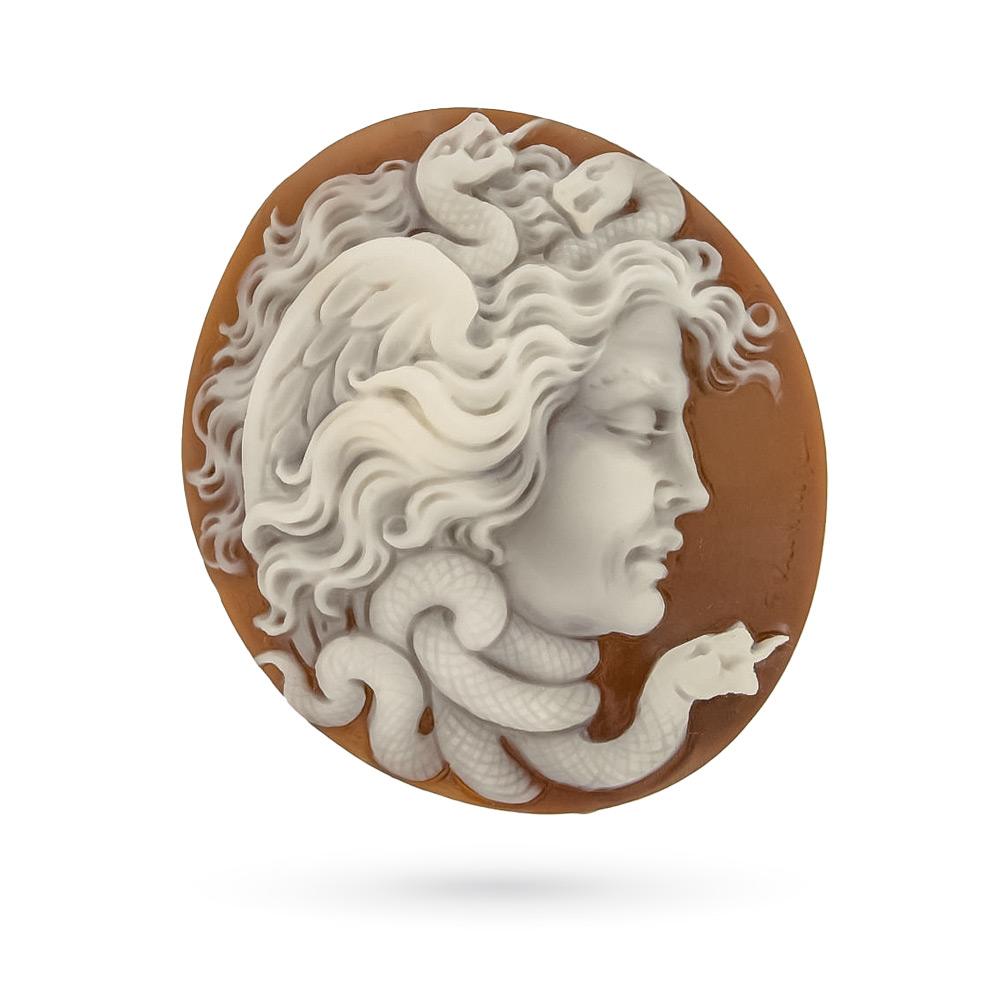
The Medusa cameo is the subject engravers have tested themselves against for two thousand years: the serpents woven through the hair require multiple planes of depth within a single millimeter of shell.
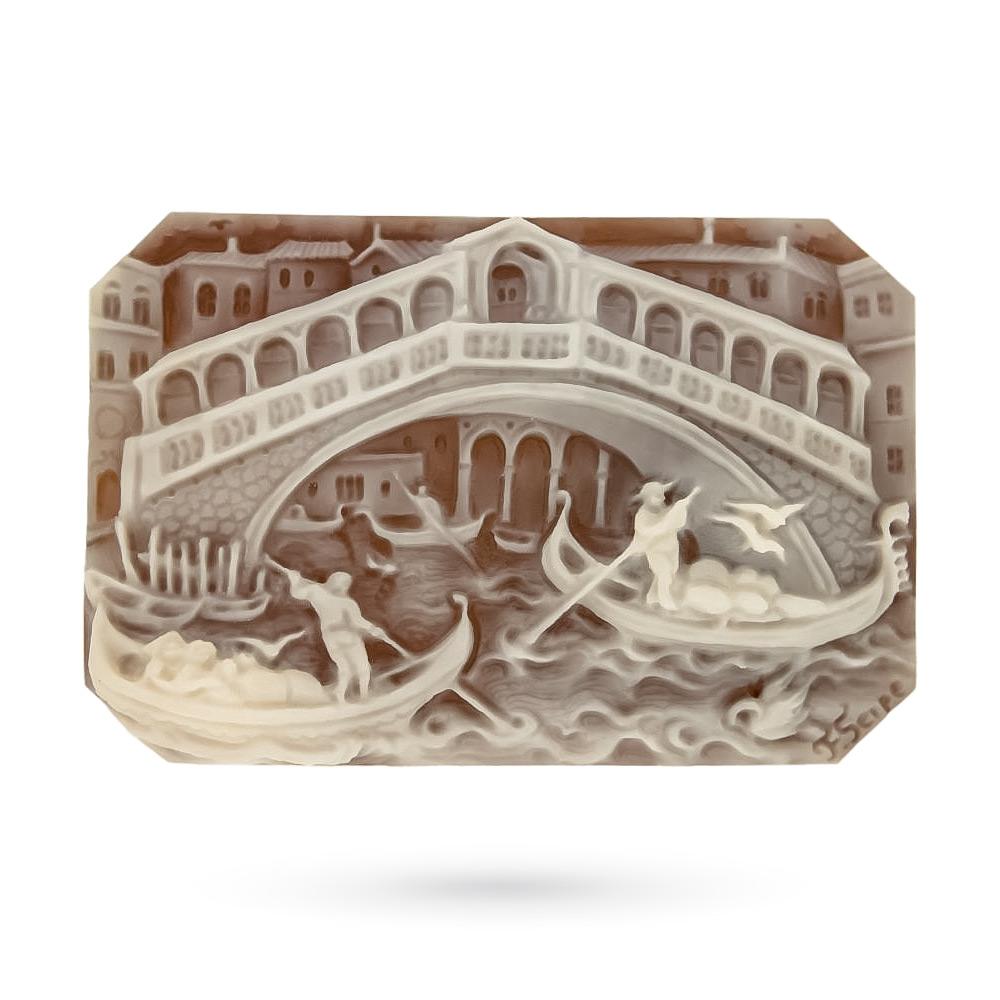
The Ponte di Rialto belongs instead to the tradition of veduta cameos: architecture in place of mythology, perspective in place of profile. It is an entirely different exercise, because depth here must evoke distance.
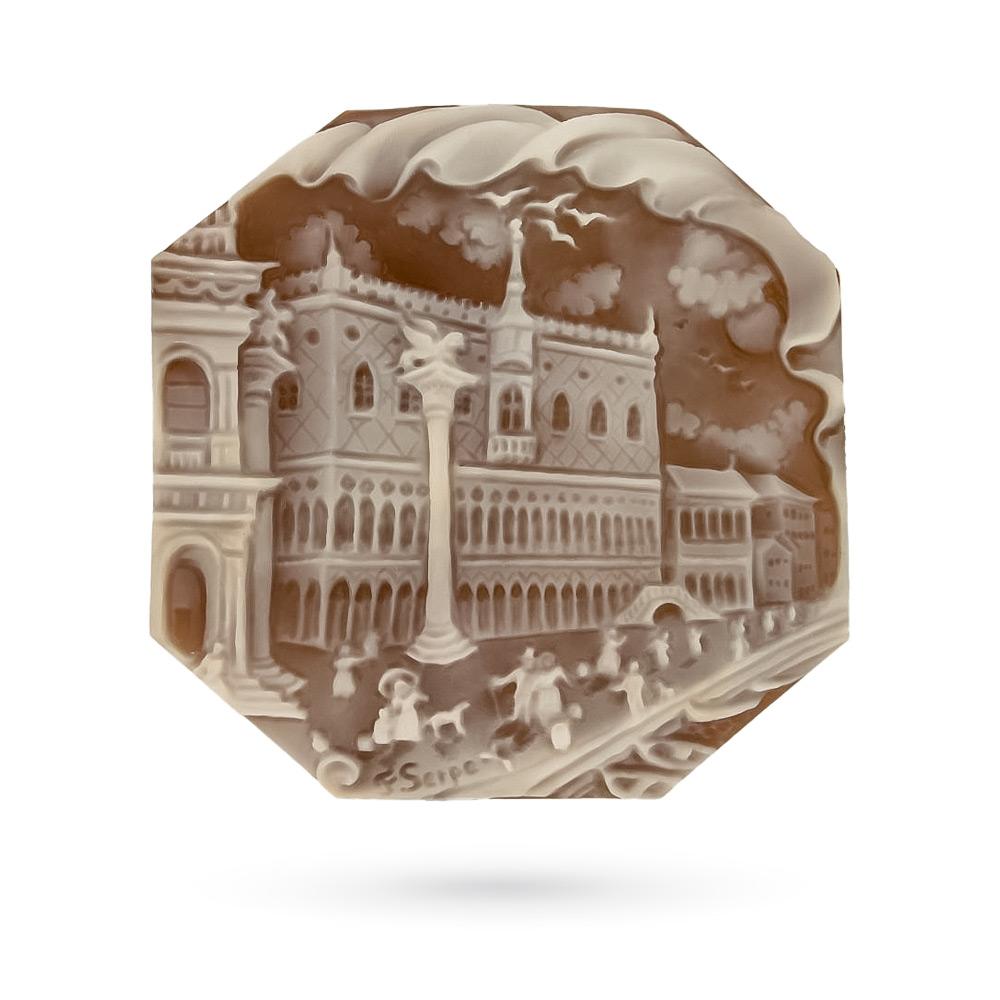
The same tradition continues with the Piazza San Marco view, where the colonnade demands from the engraver a precision that allows no second thoughts: a wrong stroke cannot be corrected — you start over.
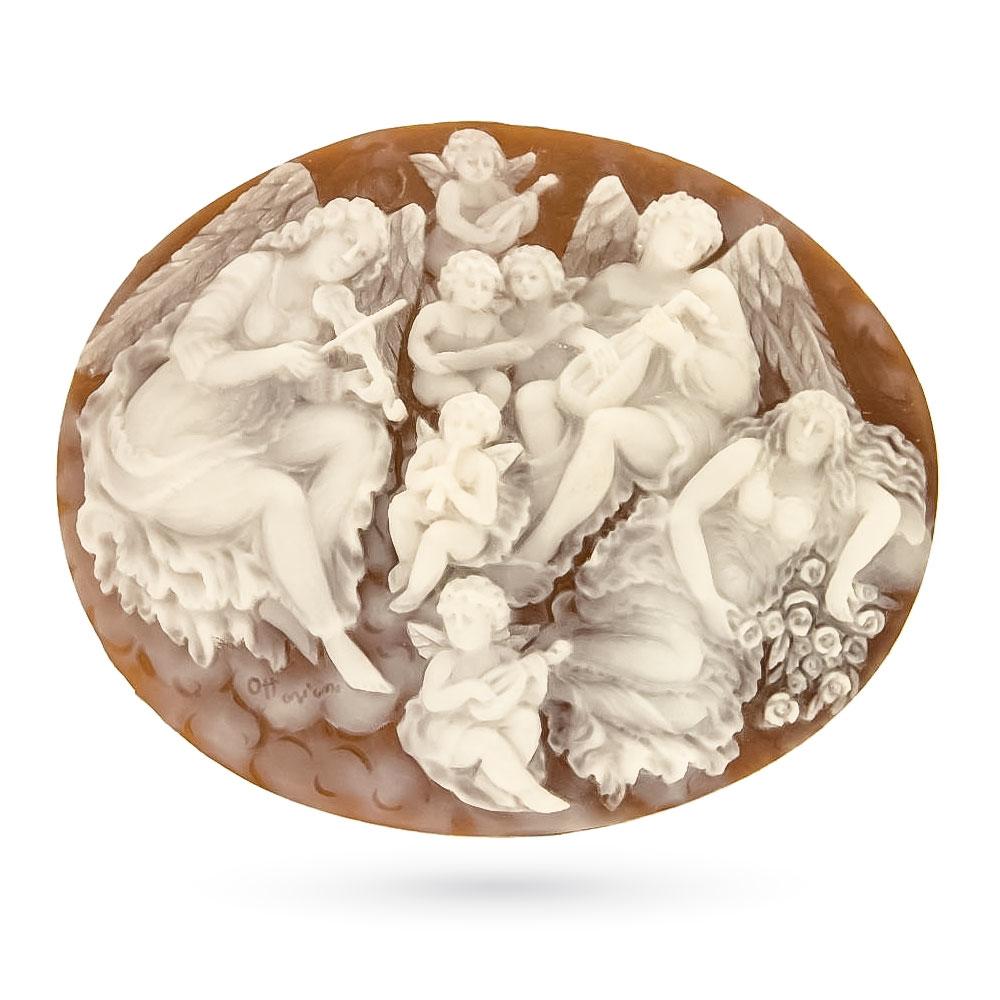
The Ninfe e Cherubini is the collector's piece of the group: multiple figures within the same scene, with overlapping planes of depth. The price of a cameo is almost always explained this way — by counting the figures and the planes.
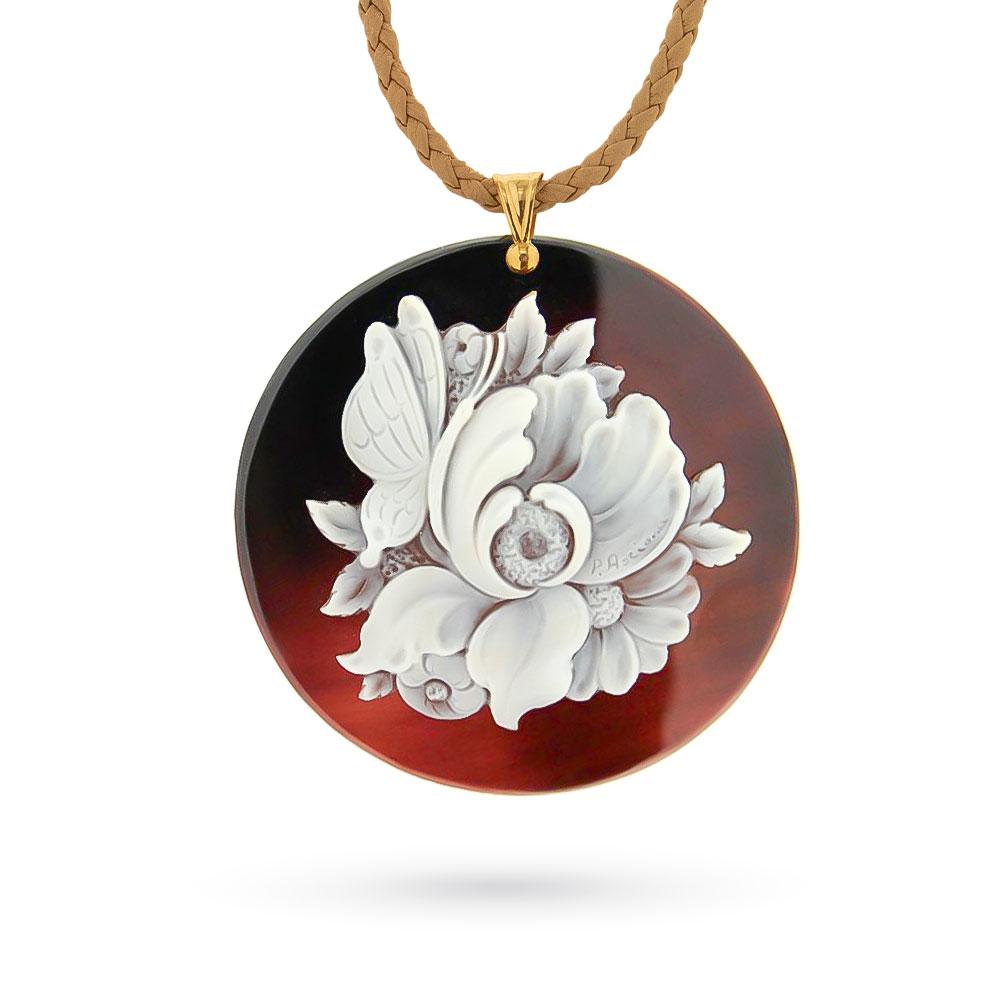
Those who want to wear it rather than simply preserve it often start with the floral cameo choker necklace: a botanical subject, six centimeters in diameter, set in a mounting that makes it an everyday jewel rather than a display piece.
Questions we are asked in the store
How do you clean a cameo? A soft cloth barely dampened with water — never alcohol, never ultrasound. Shell is an organic material: it is sensitive to heat and solvents.
Can a cameo turn yellow? Over the years shell darkens slightly, and this is considered a mark of distinction: it is the patina, the very quality sought in antique pieces.
Can an inherited cameo be reset? Yes, and it is the most frequent request we receive: we assess the thickness of the edge and build the new setting around the piece, without ever touching the carving.
How much does a genuine cameo cost? It depends on the material, the size, and the number of figures. In our collection, prices begin at just over four hundred dollars for a single-subject shell cameo and rise above two thousand for multi-figure scenes.
Why you can still find them in Genova
The cameo arrived here by sea, along the same routes as coral, and Ligurian jeweler families have worked with it for generations. At Cicala we have been selling them since 1975, and most of the pieces that pass through our counter have never been in a display window: they come directly from an engraver or a private collection.
View available cameos →