Jewellery Guides
MagicWire in the United States: 18kt Gold Rings That Adapt to the Finger
Anyone who has built a stack of rings knows the problem. You buy three, and in January all three fit. By August two of them will not go past the knuckle, and the one that does spins. Fingers change size by a full half-size across a day, more across a summer, and a solid gold band has exactly one answer to that: resize it, or leave it in the drawer.
MagicWire is an Italian house that took the problem seriously and answered it structurally. Its pieces are 18kt gold (750) built as coiled wire rather than as a solid band — a ring that is, in engineering terms, a spring.
A ring that is a spring
The house's signature is a patented construction that it describes as combining gold and silver into a structure designed for comfort. What it produces is a piece that gives under pressure and returns to shape, and three practical things follow.
It accommodates a range. A coiled ring passes a knuckle that a rigid band of the same finished size would not, then settles. That is the difference between a ring worn every day and a ring worn on cool mornings.
It survives being a gift. Buying a ring for someone whose size you do not know is normally a gamble. Here the margin for error is wide enough that the gamble mostly disappears.
It stacks without grinding. Three wire rings on one finger do not wear flats into each other the way three solid bands do. The stack is the intended look, not a compromise.
Five pieces to build around
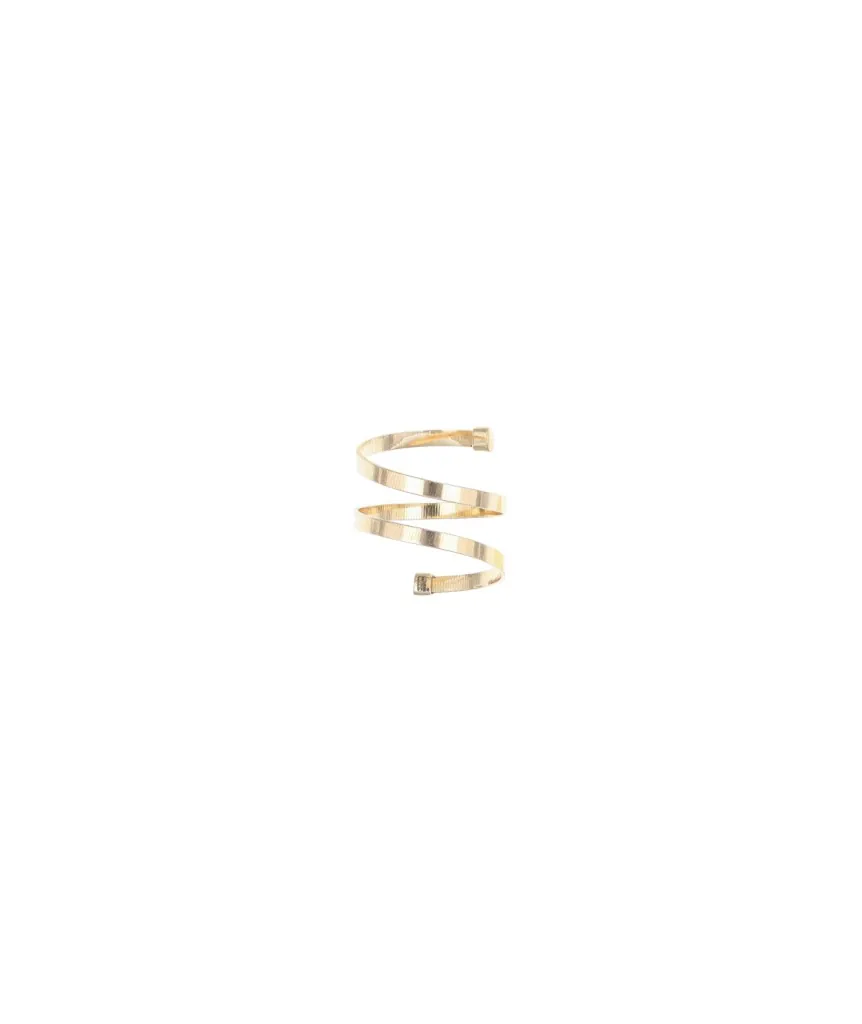
The SKIN two-row ring, SRIN collection is a whole stack in one piece: two rows of wire that read as two rings and behave as one. If the goal is the layered look without the arithmetic of matching three separate sizes, start here.
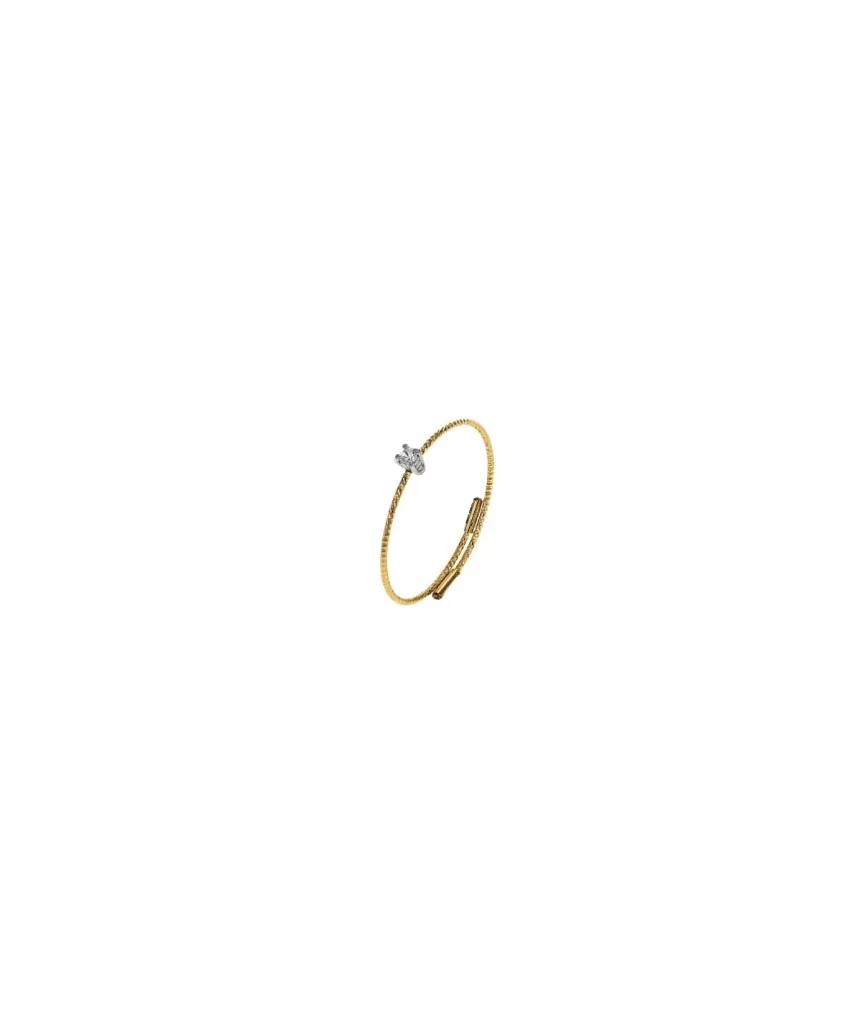
The ONE ring, BASIC collection puts a single point of light on a plain wire. It is the piece that works as a right-hand ring for someone who does not want a second engagement ring but does want a stone — a distinction American buyers make more sharply than Europeans do.
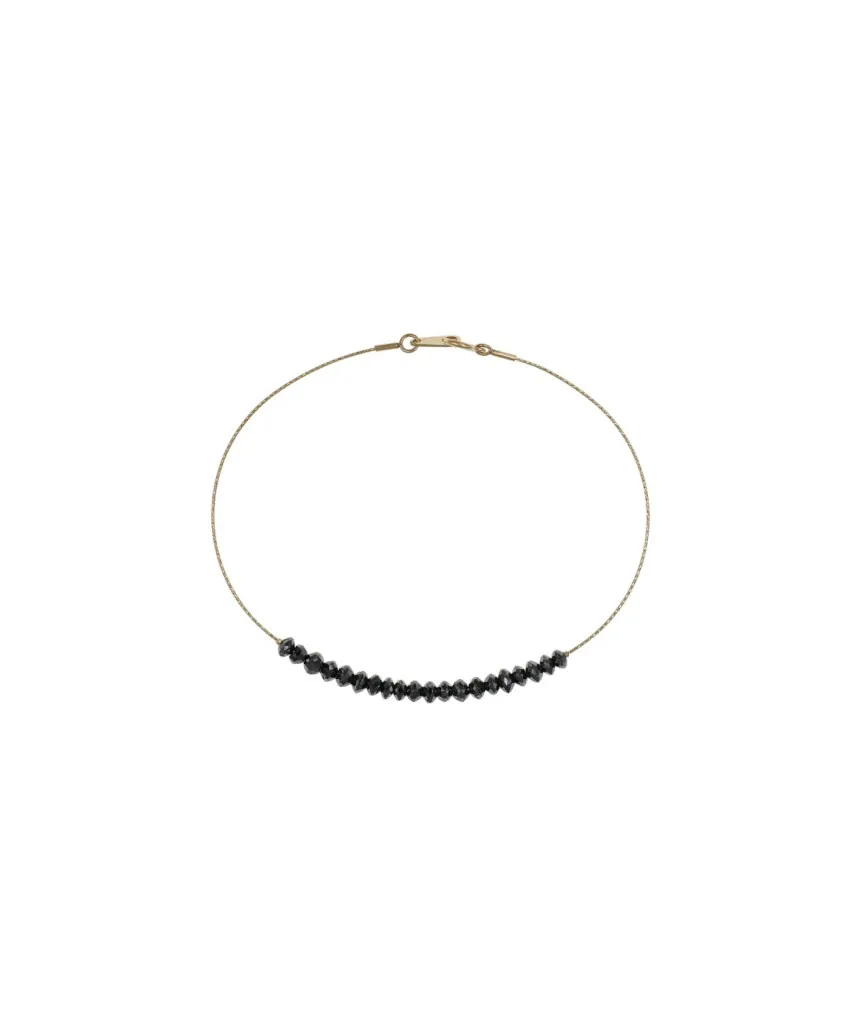
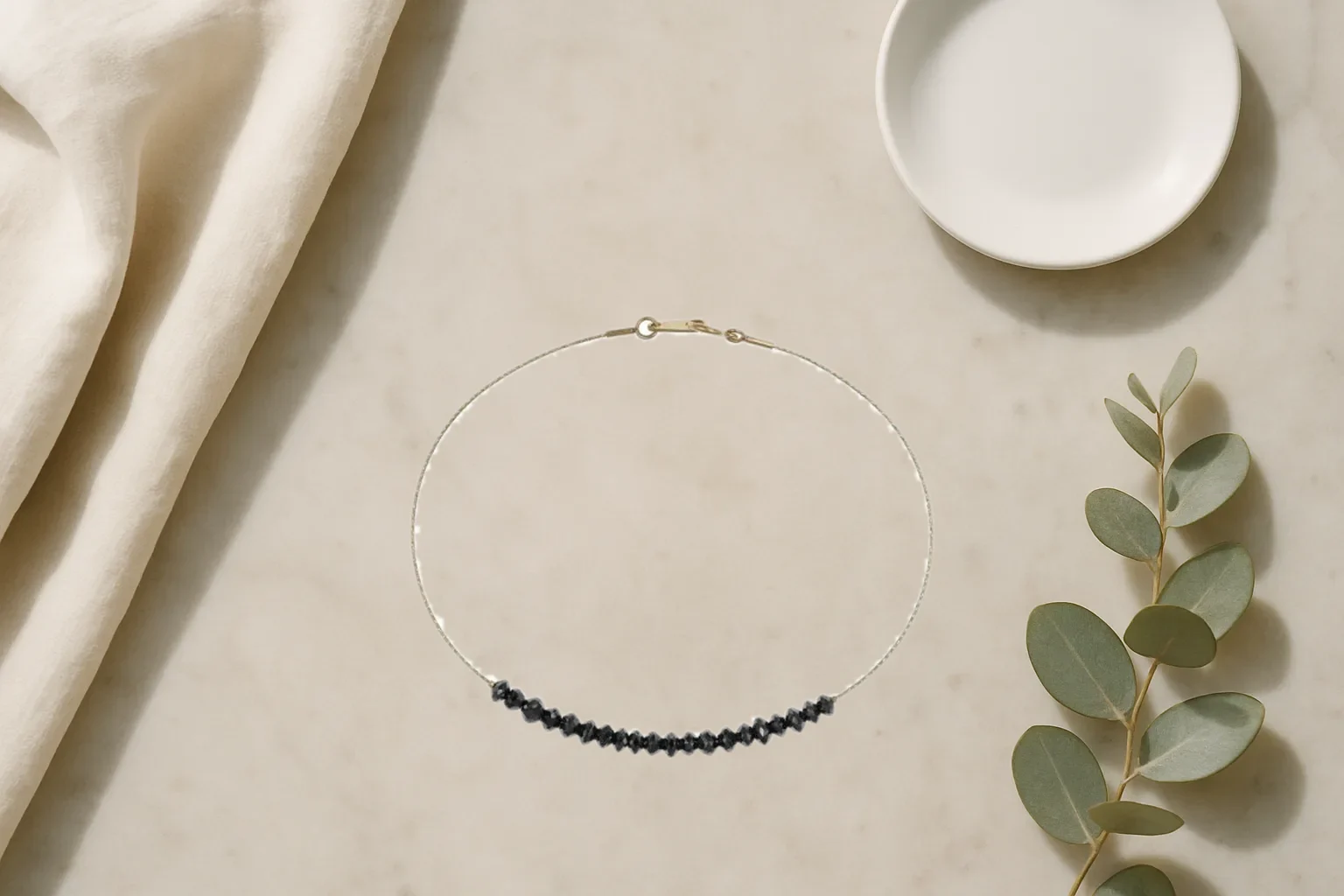
The NARA 20P bracelet with a black diamond is the one non-ring here, and it belongs: 20 cm of coiled gold that goes on over the hand without a clasp to fumble with. The black stone stops it from reading as generic gold wire.
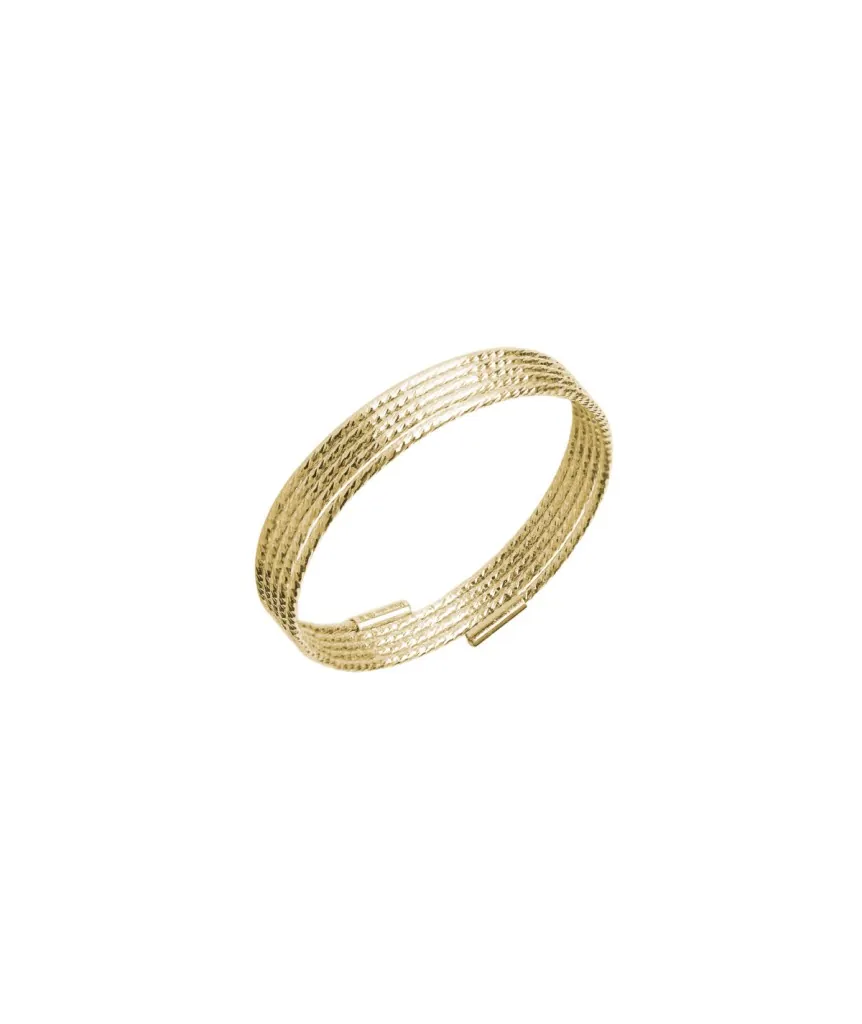
The DIVA band ring is the quiet one: a plain wire band, the piece that goes underneath the others or gets worn alone on the days nothing else is wanted. Every stack needs one, and this is the cheapest way into the house.
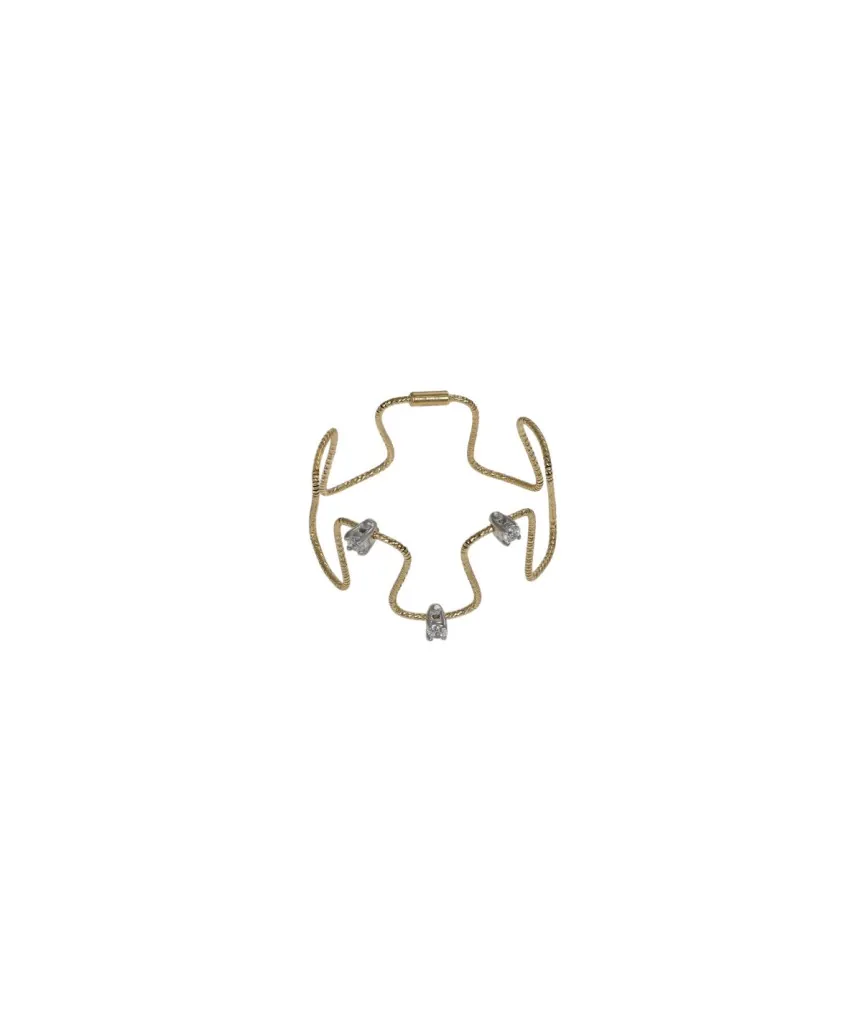
The KYMA 3 Lights ring, ONDE collection is the one with something to say. Three points of light along a wave, which means it reads differently depending on how the hand is held — the reason it works as an anniversary piece rather than a starter one.
Italian sizes and American sizes
This trips people up, so here is the arithmetic. The Italian ring size is the inside circumference in millimetres, minus 40. So an Italian 14 is 54 mm around, which is roughly a US 6¾ to 7. An Italian 16 is 56 mm, roughly a US 7½.
If you know your US size, send it and we will convert. If you do not, measure the inside circumference of a ring that already fits with a strip of paper and send us the millimetres — it is more reliable than a printed sizing chart, which depends on your printer's scaling.
And on the coiled models, this matters less than it would elsewhere. That is the entire point of the construction.
18 karat against the 14 karat you are used to
American fine jewellery runs on 14 karat: 58.3 % gold, harder, more resistant to surface scratching. These pieces are 18 karat, 750 — 75 % gold, a deeper yellow, and noticeably more intrinsic value per gram.
The trade is real and worth stating plainly. 14k resists scratches better; 18k looks better and is worth more. But the spring behaviour here comes from the geometry of the wire, not from the hardness of the alloy, and 750 is the highest fineness at which that geometry keeps its elasticity over years. Higher karat gold is simply too soft to hold a spring.
Every piece carries the Italian 750 fineness mark and the maker's punch, and our invoice states fineness and weight — the documentation an American appraiser or insurer will ask for.
Ordering from Italy
Italian VAT comes off at checkout. The United States is outside the European Union, so the 22 % Italian VAT is deducted rather than added. The price on the product page includes Italian tax; the total you pay is lower.
Duty is set on arrival. US import duty and any applicable taxes are determined by US Customs and Border Protection according to value and classification, and the courier handles the entry and collects what is due. We do not include it and we do not quote it, because we cannot guarantee a figure that is not ours to set.
Delivery is €22.50, three to five working days to any US address, insured and tracked door to door from Genoa. Each piece travels in its branded box, with an invoice stating fineness and, where there is a stone, its weight.
Questions from American buyers
Can these be resized? The coiled models rarely need it. The closed bands can be discussed case by case — write to us before ordering rather than after.
Will the wire lose its spring? Not in normal wear. What ruins it is forcing the coil open by hand to make it fit, which the design is specifically meant to make unnecessary.
Is this solid gold? The pieces are hallmarked 750. The patented construction combines metals by design — that is what makes the lightness possible — and the mark on the piece states exactly what it is.
Can I wear it in water? Yes, but chlorine and salt build up inside a coil faster than on a flat band. Rinse and dry it after the pool.
Do you ship to Canada as well? Yes, on the same standard courier and the same three-to-five working days.
See the MagicWire collections →