
Guide di orologeria
DOXA: the history of the dive watch that invented the orange dial
In short. DOXA was founded in Le Locle in 1889 and for its first seventy years made something else entirely: pocket watches, chronometers and, above all, the dashboard clock fitted to Bugatti racing cars. Then, in 1967, it showed the SUB 300 at Basel: the first professional-grade dive watch sold to the public, with an orange dial and a bezel engraved with the no-decompression table. If you are looking for which one to buy and what it costs, that is on the DOXA watches page; this is why an orange dial is an engineering decision and not a styling one.
Le Locle, 1889: a twelve-year-old apprentice
Georges Ducommun was one of thirteen children and twelve years old when he began his apprenticeship with a watchmaker in Le Locle, in the Swiss Jura, in 1880. He opened his own workshop in 1889 and in 1906 gave it the name it still carries: DOXA, Greek for glory.
1907: the clock on a Bugatti's dashboard
The first properly DOXA object is not a wristwatch. Endurance racing needed a rugged dashboard clock with a long enough power reserve, and in 1907 Georges patented the 8-Day DOXA Caliber. It became standard equipment on Bugatti racing cars and then an industry standard — first in cars, then in ships and aircraft.
1964: the test in Lake Neuchâtel
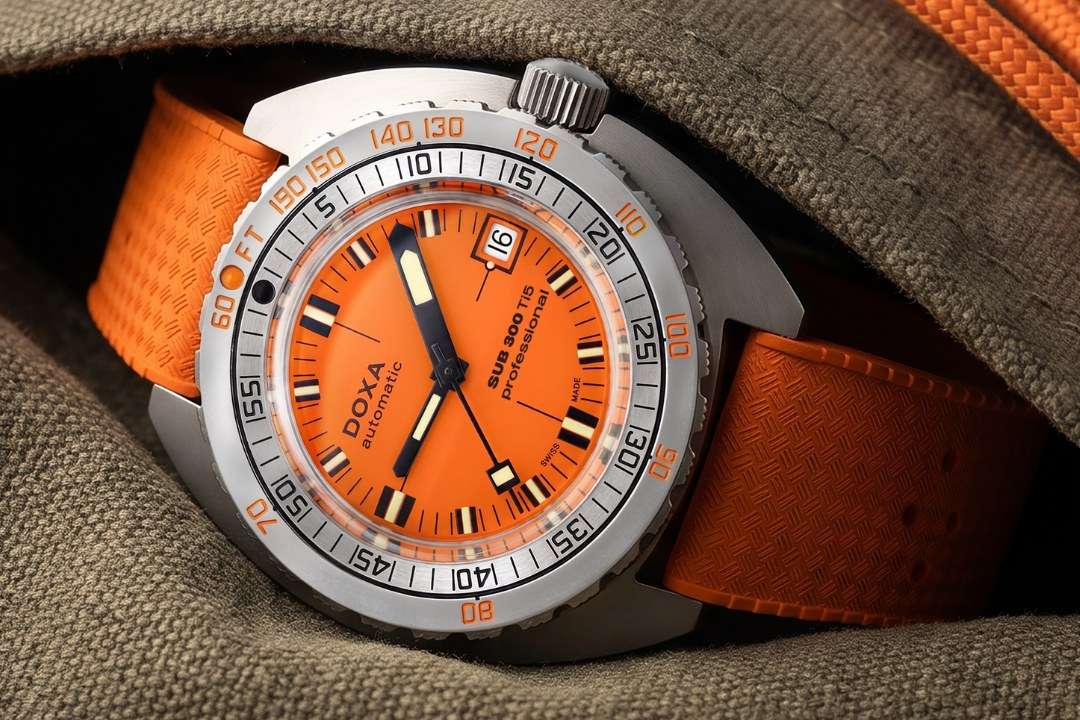
While the world was looking at space, DOXA's Urs Eschle was looking at the sea floor. With diving legend Claude Wesly, his team went down into Lake Neuchâtel to measure one thing: which colour stays legible longest as the light fades. The answer was bright orange. It is not a fashion colour: it is the result of a test.
1967: the SUB 300
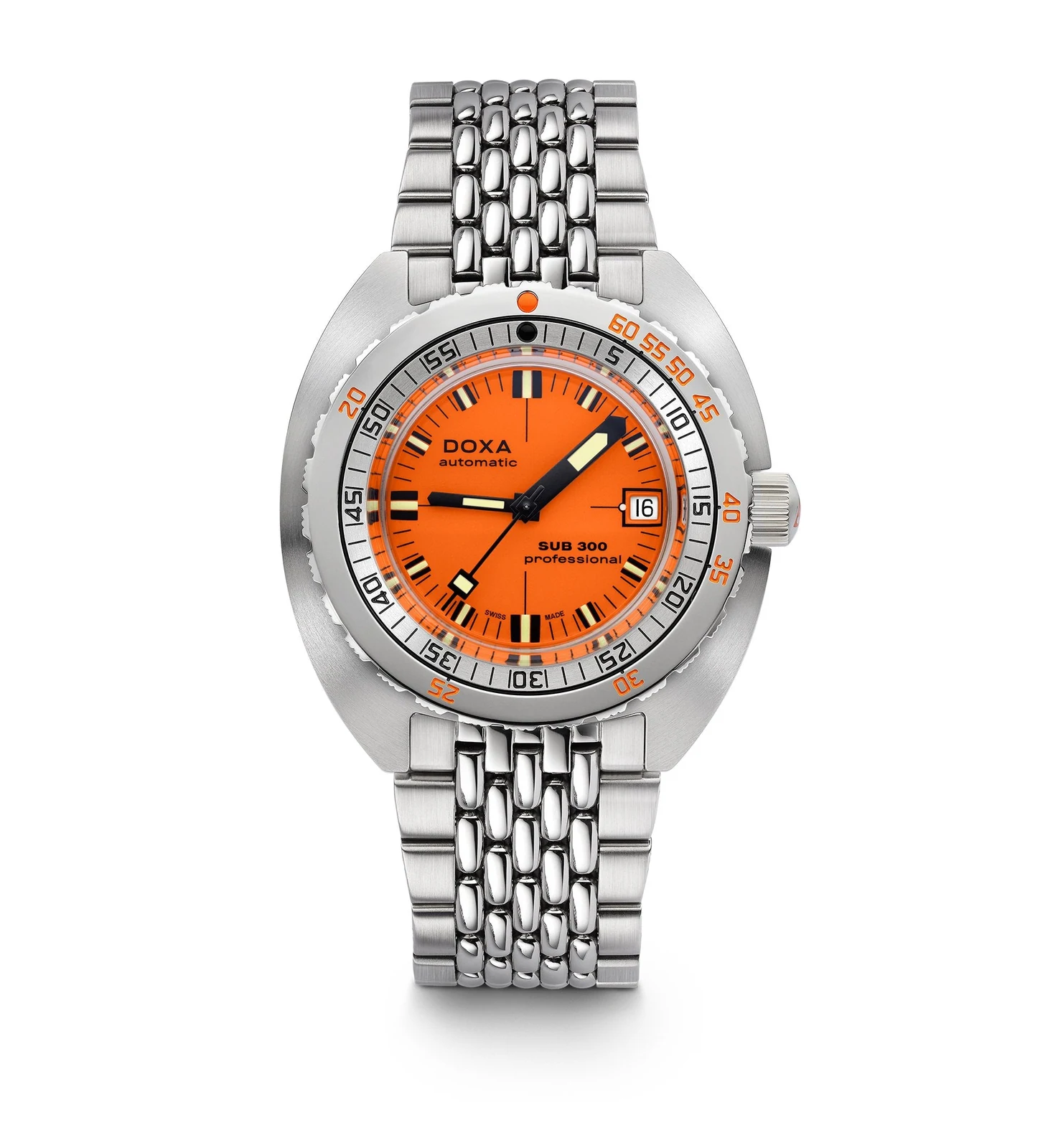
The SUB 300 debuted at Basel as the first professional-grade diver's watch made for the public rather than only for navies: a patented rotating bezel carrying the decompression table, an orange dial, and a beads-of-rice bracelet with a clasp that extends over a wetsuit. Jacques-Yves Cousteau, co-inventor of the Aqua-Lung, took part in its development and then distributed it in the United States through his U.S. Divers company. Today that watch is the SUB 300 Professional, from 2.750 €.
1968: the SUB 300T Conquistador and the helium valve
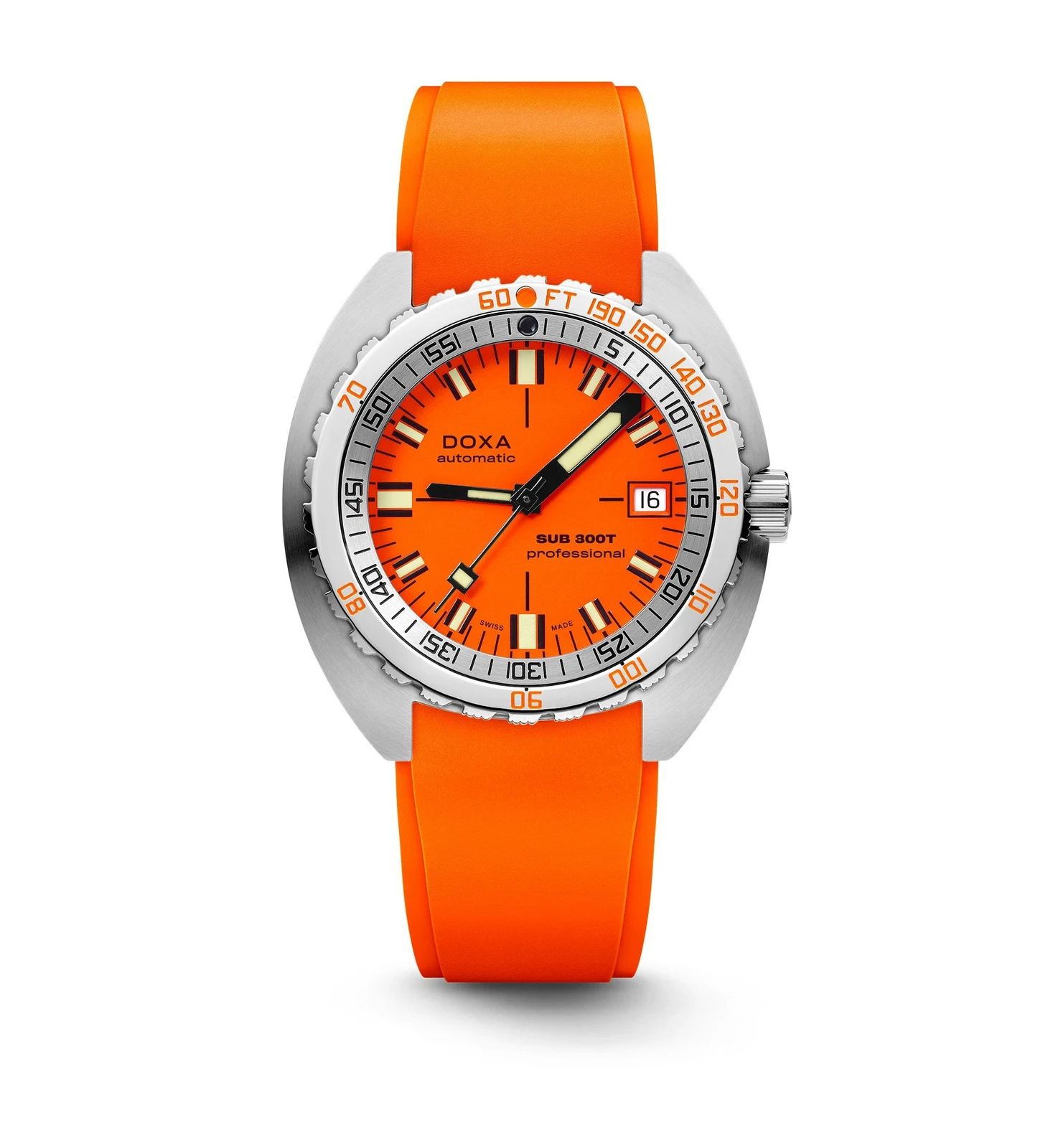
A year later came the SUB 300T Conquistador, among the first dive watches with a helium escape valve: saturation divers need the helium that seeps into the case during days in the bell to escape on ascent without blowing the crystal off. Today's reading of it is the SUB 300T Professional, 1.950 €, water resistant to 1,200 metres.
1969: the Swiss Army divers
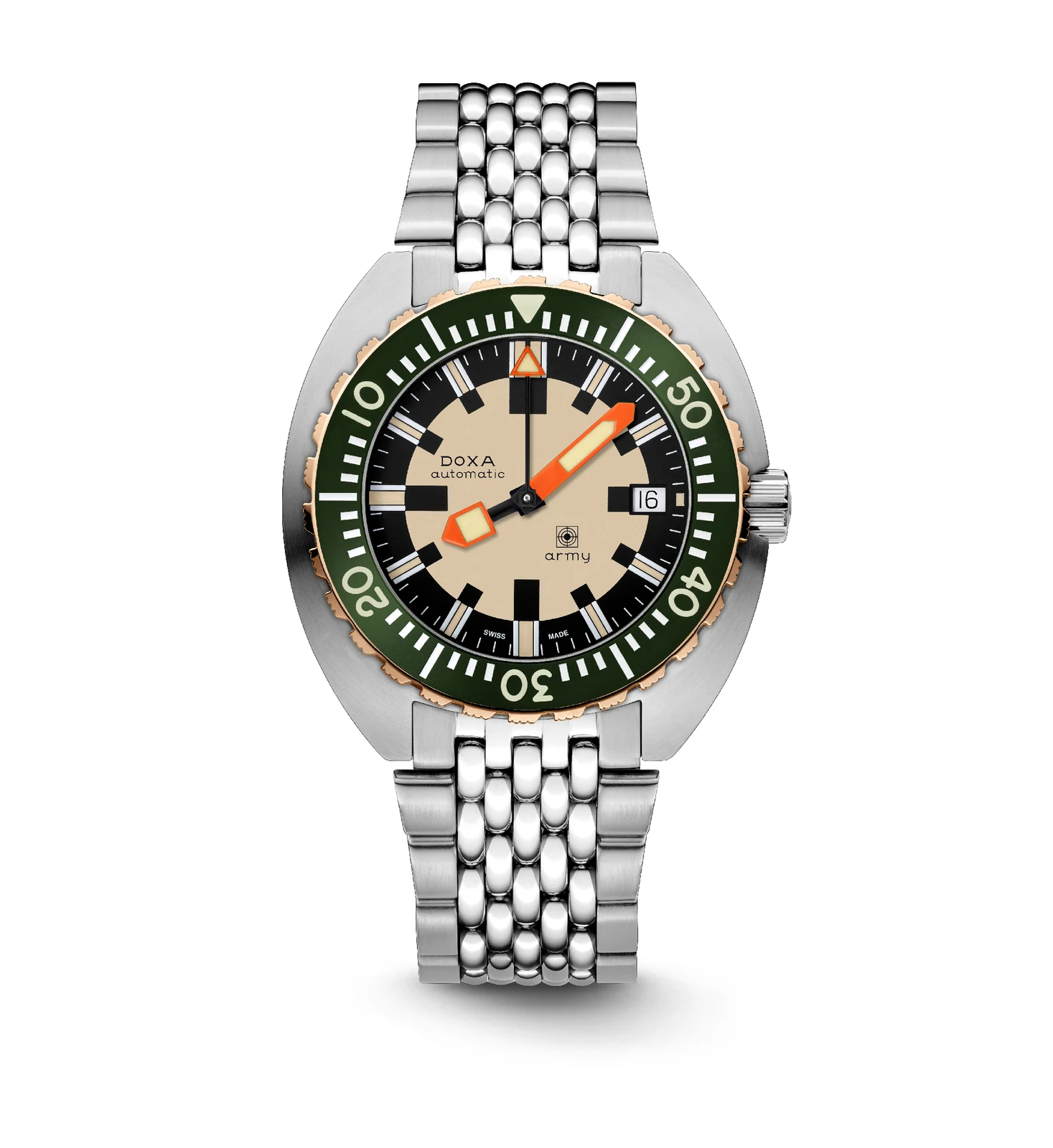
From 1966 the Swiss Army formed an elite corps of military divers and, after testing, issued them the SUB 300T Professional: between 1968 and 1975 about 150 were delivered, each engraved with its own number. Today's DOXA Army line comes from there.
1973: Dirk Pitt
In 1973 novelist Clive Cussler put an orange SUB 300T on the wrist of his character Dirk Pitt. Twenty novels later the watch is a character in its own right — which is why a Clive Cussler series still exists, with a hand-made dial that looks like an old compass.
And today
After the quartz years, in 1997 the Jenny family — four generations of watchmakers — acquired DOXA and moved the headquarters to Biel/Bienne. Since 2019 Romeo F. Jenny has chaired the board and Jan Edöcs has been CEO. The adventure, as they tell it, has been going for more than a hundred and thirty years.
Authorised DOXA retailer in Italy. See all DOXA watches
Craft, guides and new arrivals
Subscribe to receive the stories from our magazine, our buying guides and a selection of pieces chosen by our goldsmiths and watchmakers.


