Senza categoria
Investing in Gold: Why and How to Do It Wisely
In brief. Investment gold is a tool for preserving value over time, not for generating income: it pays no coupons or dividends, but it depends on no issuer. It is bought in certified bars at a fineness of 999.9, or in internationally recognized coins, it is VAT-exempt by law, and it must be stored with care. At Cicala, in our stores in Pegli and at via San Vincenzo 110r in Genova, you can buy and sell at the daily spot price, with proper documentation.
When we wrote the first version of these pages, in the spring of 2025, gold was touching historic highs and many people were noticing it for the first time. The reasons were no mystery: inflation in the euro area still above the ECB's target, sluggish European and Italian growth, commercial and political tensions that made twelve-month forecasts nearly impossible. In that climate, the questions we heard at the counter had shifted in tone: no longer "what's the return," but "how do I avoid losing what I have."
It is a legitimate question and it deserves an honest answer — one that doesn't sound like a promise. Gold is not a shortcut, and it is not an investment you manage by watching charts every morning. It is a metal that has served a precise function for millennia: carrying value through time, even as currencies, governments, and banking systems change. Understanding what it can do — and what it cannot — is the most important part of any purchase.
What happens to money sitting in a bank account
Capital left in a bank is not standing still: it is exposed to three forces at once. The first is inflation, which erodes purchasing power even when the balance remains unchanged; if the deposit yield barely keeps pace with rising prices, the real gain is zero — and if inflation climbs again, the account closes at a loss. The second is remuneration: deposit rates follow central bank decisions, and when rates are cut, margins thin quickly.
The third is systemic risk. The European banking sector is solid and well-capitalized, and deposits are protected by guarantee funds up to the limits set by European regulation — but above that threshold, the protection disappears. The 2008 financial crisis and the Cyprus case of 2013, in which depositors were drawn into the rescue of failing institutions, showed that such scenarios are unlikely but not impossible. In Italy there is also a different and well-remembered precedent: on July 10, 1992, the Amato government issued an emergency decree applying a retroactive levy of six per thousand on all current accounts to address a financial emergency.
The point is not to stoke alarm. It is to note a structural difference: physical gold is not a claim on anyone. It has no counterparty, it does not sit inside a balance sheet, and it cannot be subject to decisions that affect deposits. Whoever holds it simply holds it.
What history tells us about gold
Two episodes, above all others, explain why gold is called a safe-haven asset. In the 1970s, with double-digit inflation and the end of dollar convertibility, the price moved from a few dozen dollars per ounce to several hundred within a decade. In 2008, while stock markets lost in a matter of months what had taken years to build, gold rose steadily and over the following five years more than doubled in value.
There is also more recent behavior worth observing, because it involves buyers who do not act on impulse: central banks. Since 2022, monetary authorities have resumed accumulating gold bars on a very large scale — over one thousand tonnes in the 2022–2023 period alone — and have continued in the years since. The National Bank of Poland added twenty-one tonnes in November 2024; the People's Bank of China resumed purchases in January 2025. When those who print money choose to hold metal, they are saying something about confidence in the long term.
The forms of investment gold
Not all gold is investment gold. The distinction is both technical and fiscal, and it changes matters considerably at the point of resale.
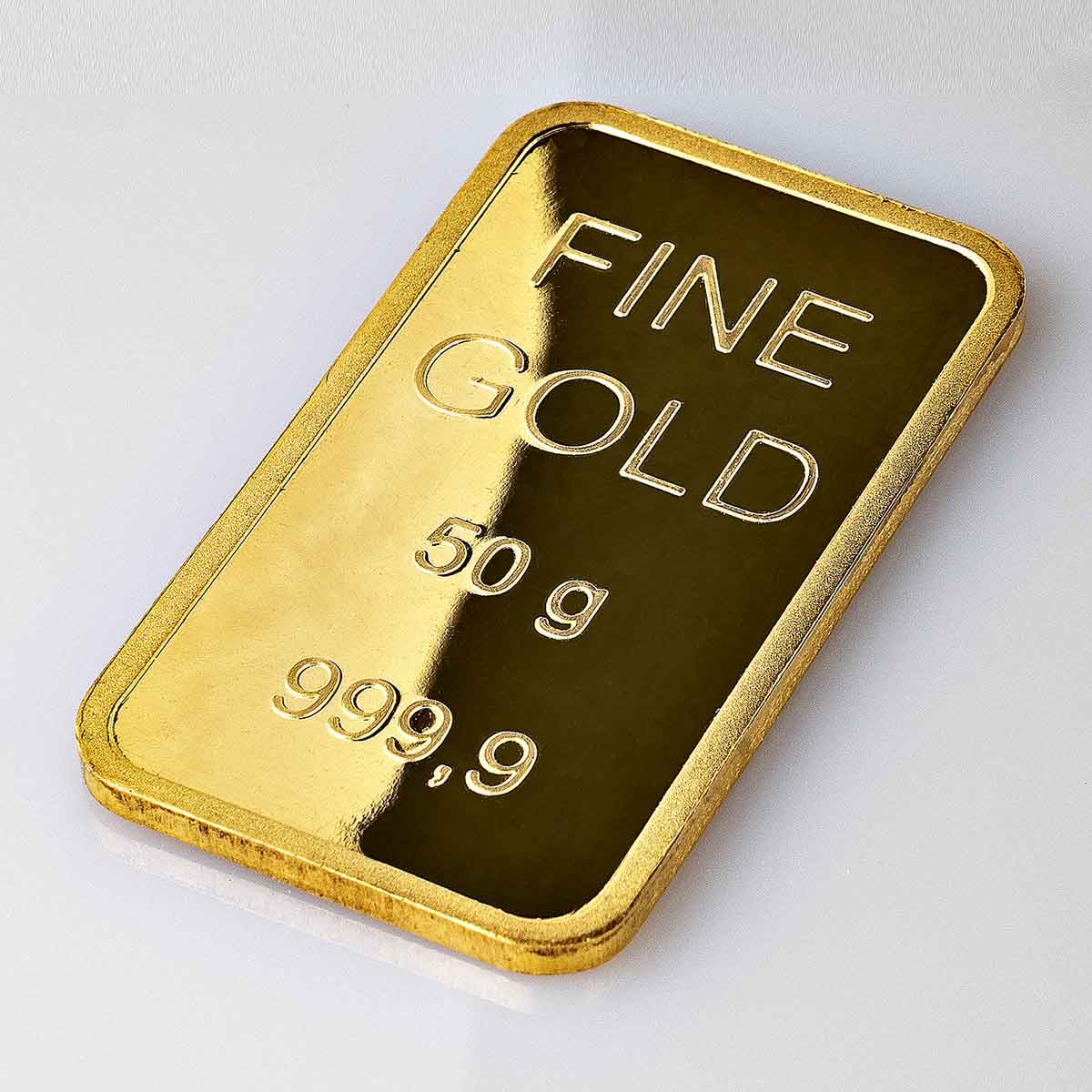
- Bars. The most straightforward form. Available in standard sizes — 1, 5, 10, 20, 50, 100, 250, 500 grams and one kilogram — at a fineness of 999.9, meaning 24-karat gold. Each piece bears the refinery hallmark, a serial number, and a certificate of authenticity; smaller sizes are normally sealed in a blister pack, which should not be opened as it forms part of the certification. Here you will find our selection of bars.
- Investment coins. The South African Krugerrand, the Canadian Maple Leaf, the American Eagle, the British Britannia, the Australian Nugget, plus classic European pieces such as the sovereign and the marengo. They carry legal tender status in their country of origin, are recognized worldwide, and allow you to divide your holdings into small denominations: you can sell one coin at a time without touching the rest.
- Gold jewelry. It carries the intrinsic value of the metal, but the purchase price includes craftsmanship, design, and brand — none of which are recovered at resale. It is bought to be worn, not as a pure investment.
Advantages and limits, stated plainly
The advantages are those already described: a tangible asset, free of counterparty risk, historically effective as a hedge against inflation, liquid at any moment and in any country, with no management costs if you store it yourself.
The limits deserve equal weight. Gold generates neither interest nor dividends: one kilogram today will be one kilogram in twenty years, and all the return depends on the spot price. In the short term it can be volatile, as it is affected by speculation, the euro-dollar exchange rate, and industrial demand. It requires serious storage. And between the purchase price and the sale price there is always a spread, which makes gold poorly suited to operations spanning just a few months. It is an instrument of preservation, not of active growth.
How it compares to other choices
Equities can offer significant returns, but they fluctuate sharply precisely when stability is most desired. Bonds provide a predictable income stream and low volatility, but when rates fall they struggle to outpace inflation. Real estate protects against rising prices and is tangible, yet it requires substantial commitments, ongoing maintenance costs, and long timelines to become liquid again.
Gold occupies a different category: it is not directly correlated to financial markets, and so it acts as a counterweight when the rest of a portfolio is under pressure. For this reason, the sensible approach is not "put everything into gold," but to allocate a share of your assets to it — determined with your own advisor according to your time horizon and objectives. The choice between bars and coins, and between large and small denominations, follows from there.
Taxes, documentation, and storage
In Italy and throughout the European Union, investment gold is VAT-exempt: Law 7 of January 17, 2000, defines it as such — bars of a weight accepted by the market with a fineness of 995 thousandths or higher, and gold coins of a purity of 900 thousandths or higher, minted after 1800, which have or have had legal tender status in their country of origin. Transactions are conducted through professional gold operators registered with the Banca d'Italia, with identification of the buyer and, above applicable thresholds, reporting in compliance with anti-money-laundering regulations. It is advisable to keep the invoice, certificates, and blister packaging: together with the metal itself, they establish its traceability.
For storage, there are three options: a home safe bolted to the structure, a bank safe-deposit box, or professional storage at a specialized vault. For significant quantities, dedicated storage remains the most orderly solution, as it includes insurance and periodic verification.
Buying and selling gold in Genova, at Cicala
In the trade since 1950 and with our store open since 1975, we offer investment gold alongside jewelry and watches. The approach is straightforward: certified bars and coins, pricing anchored to the daily gold spot rate, every transaction documented in accordance with current regulations. We also buy from private individuals — both investment gold in bars and coins, and secondhand gold such as jewelry and silverware — with valuation carried out in front of you.
We have two full-service stores in Genova: at via San Vincenzo 110r and at via Martiri della Libertà 23-25r in Pegli. The inventory is split between the two locations, so to find out where a specific item is held it is best to message us on WhatsApp at +39 010 698 1030 or visit our contacts and stores page. If you prefer to think it over in person, make an appointment: half an hour at the counter, pieces in hand, clears up more than any web page can.
Frequently asked questions about gold investment
- Is investment gold subject to VAT?
- No. Bars with a fineness of 995 thousandths or higher, and coins recognized as investment gold, are VAT-exempt in Italy and throughout the European Union. Jewelry, on the other hand, falls under the standard tax regime because it includes craftsmanship.
- Is it better to buy one large bar or several smaller pieces?
- It depends on how you plan to sell. A single large denomination is more cost-efficient at purchase; coins and small bars allow you to liquidate only the portion you need, leaving the rest intact. Many buyers choose a combination of both.
- How do you store physical gold safely?
- An anchored domestic safe, a bank safe-deposit box, or storage at a professional vault. For significant quantities, specialized storage is the most protected choice, combining surveillance, insurance, and inventory management.
- Can I open the blister pack to look at the bar?
- It is best not to. The seal with the serial number is part of the certification, and an intact blister pack makes resale considerably simpler. If a piece has been opened, the appropriate checks are carried out before repurchase.
- Does Cicala buy gold from private individuals?
- Yes — both investment gold in bars and coins, and secondhand gold such as jewelry and silverware. Valuation takes place in store, at the daily spot rate, with a valid ID and a proper receipt.
Continue exploring
Craft, guides and new arrivals
Subscribe to receive the stories from our magazine, our buying guides and a selection of pieces chosen by our goldsmiths and watchmakers.