Jewelry
LeLune Jewelry: Italian Elegance with Pearls and Diamonds
In brief. LeLune is the jewelry brand of maison Coscia, an Italian name in pearl and gold craftsmanship. It is divided into two lines: LeLune Glamour, dedicated to pearls — Japanese Akoya, freshwater cultured, South Sea — and LeLune Diamonds, featuring solitaires, trilogy rings, rivieres, and diamond stud pieces. Italian production. At Cicala you'll find a curated selection across both Genova stores, in Pegli and at via San Vincenzo 110r; to find out where a specific piece is located, reach us on WhatsApp.
Those who walk into a jewelry store asking for «a pearl piece» often have a single image in mind: the classic three-strand necklace inherited from someone. LeLune was born precisely to challenge that idea, without denying it. The pearl remains the star, but it is set in gold, paired with diamonds and colored stones, suspended in compositions you can wear with a shirt on a Tuesday morning.
Behind the brand is Coscia, an Italian maison with a long history in goldsmithing centered on pearls and gold. LeLune is its jewelry line, structured around two distinct product families: LeLune Glamour, built entirely around the pearl, and LeLune Diamonds, which brings the same artisan hand to the diamond. Two different ways of reaching the same result: a piece of jewelry recognized up close, in the details of its setting, rather than from a distance.
Below you'll find what sets the two lines apart, how to assess the quality of a pearl and a diamond before purchasing, and which measurements truly matter when choosing a necklace or bracelet.
Coscia and LeLune: the maison and its brand
LeLune is not a brand born from nothing to fill a shelf: it is the name through which Coscia brings into jewelry a craft built on pearls and gold. This explains two things you notice when handling the pieces. The first is the consistency of the pearls within a single strand or a matching pair of earrings — calibration, tone, luster: this is no random selection. The second is the care given to the parts no one photographs — clasps, joints, earring posts, the point where the pearl meets the metal.
Production is Italian. This matters when we speak of pearls, because stringing, drilling, and gold mounting are manual operations where the difference between work done well and work done in a hurry shows after two years of wear, not on the day of purchase.
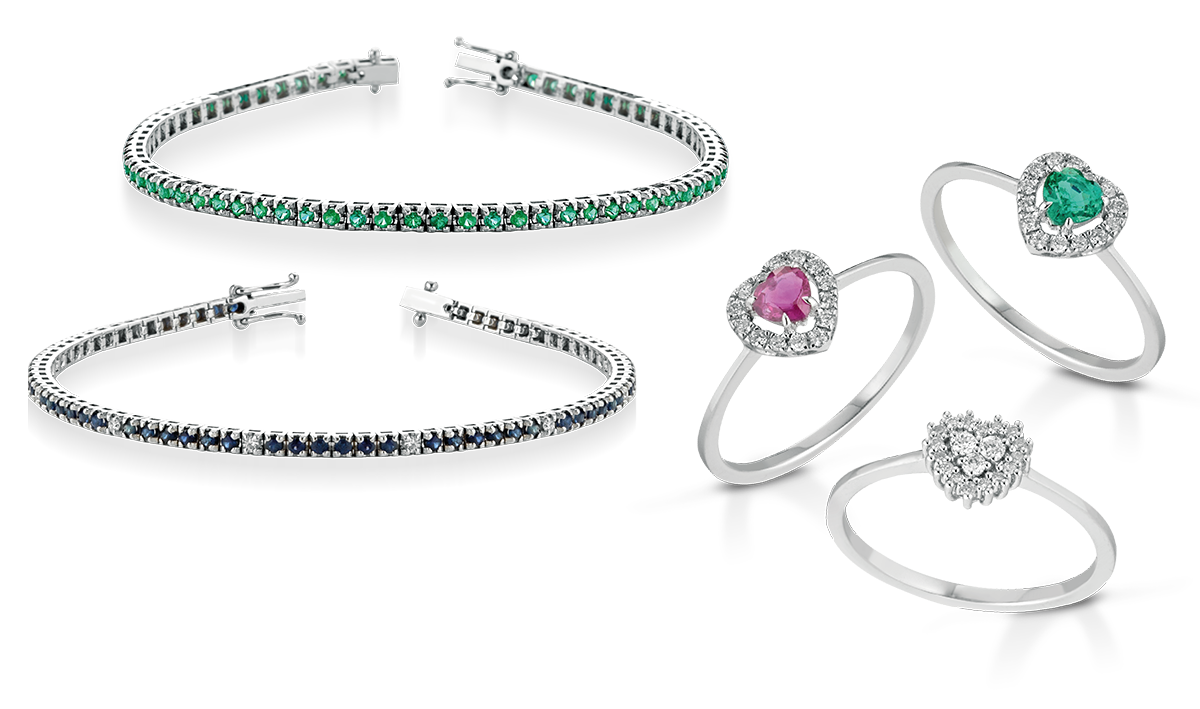
LeLune Glamour: the pearl in all its forms
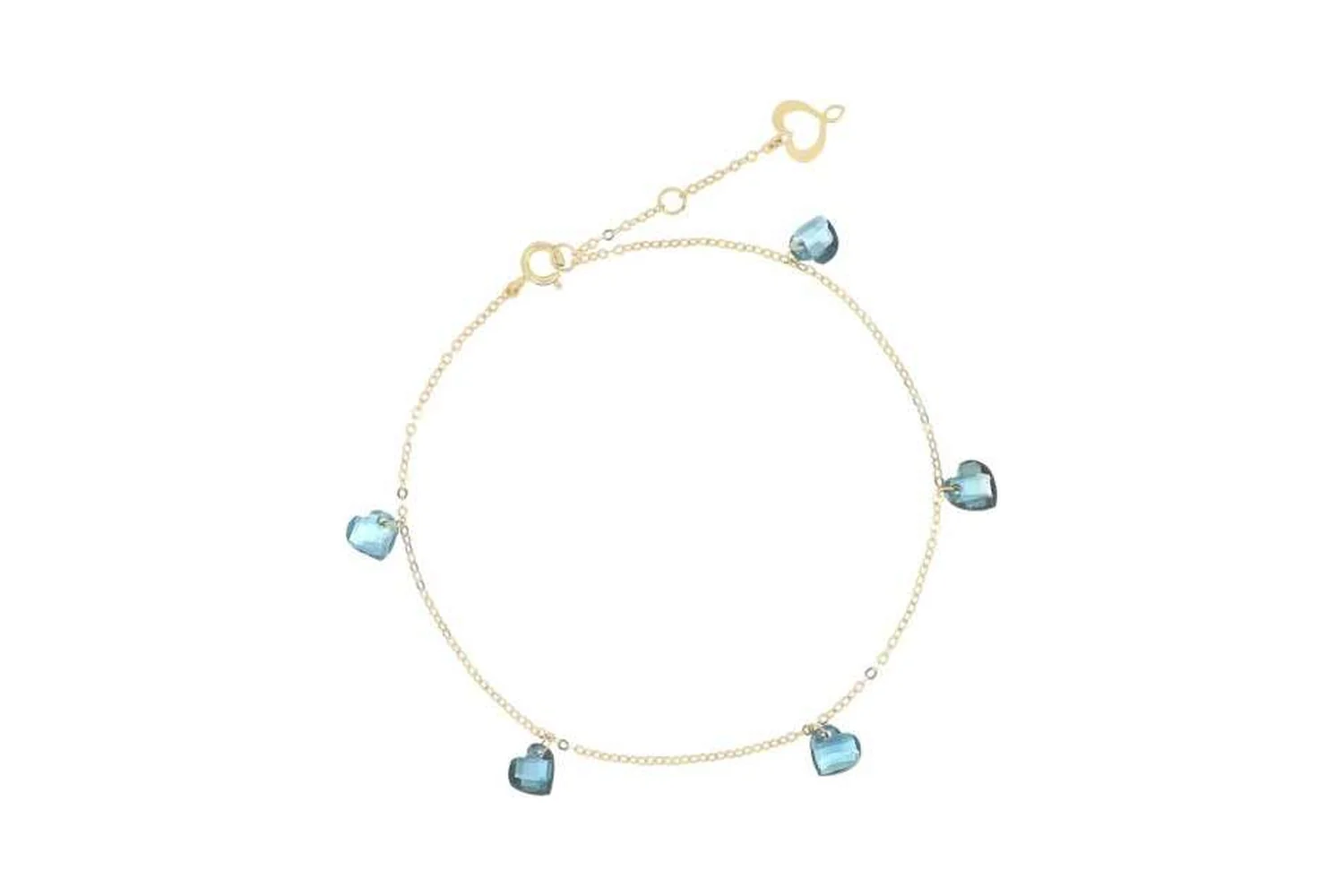
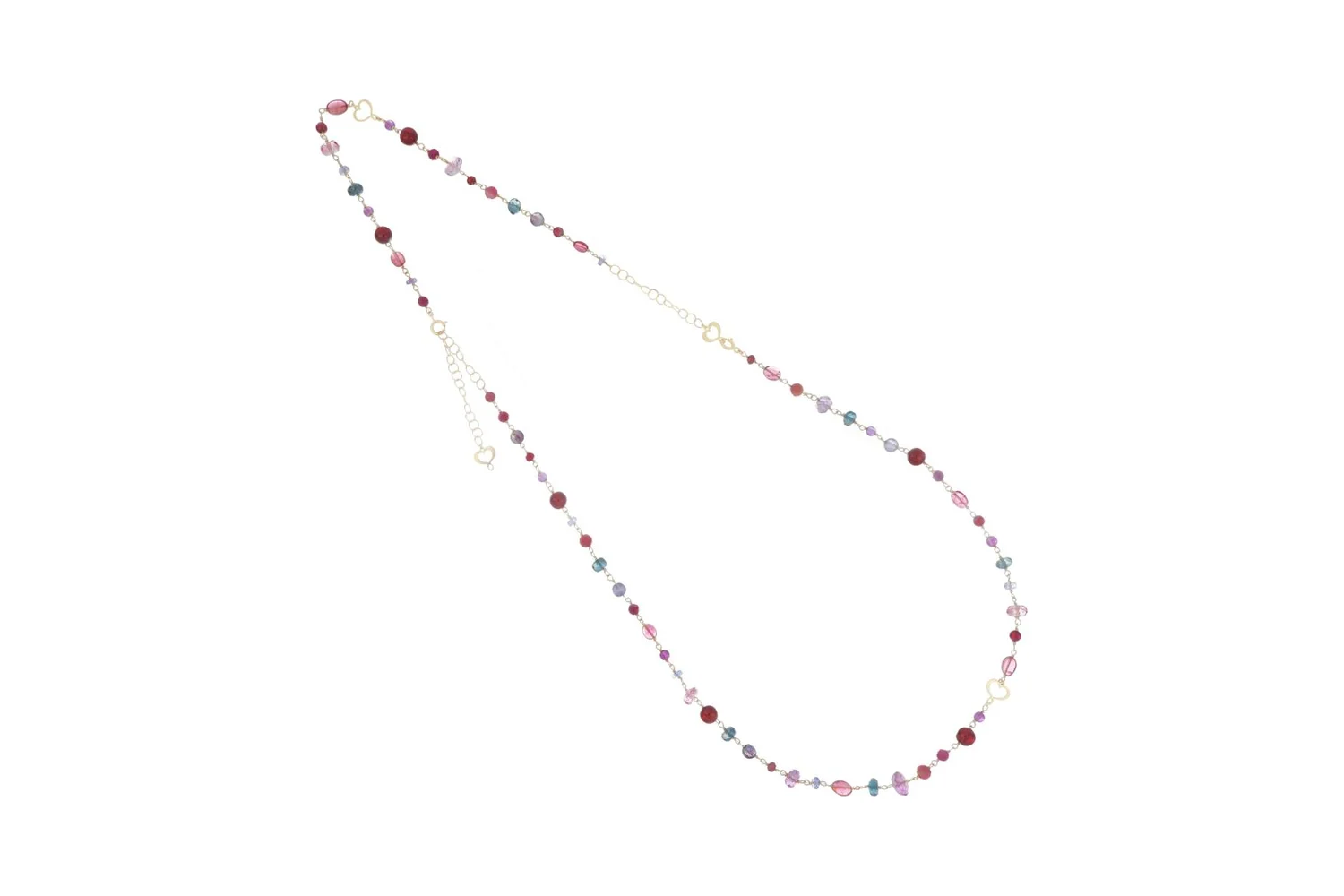
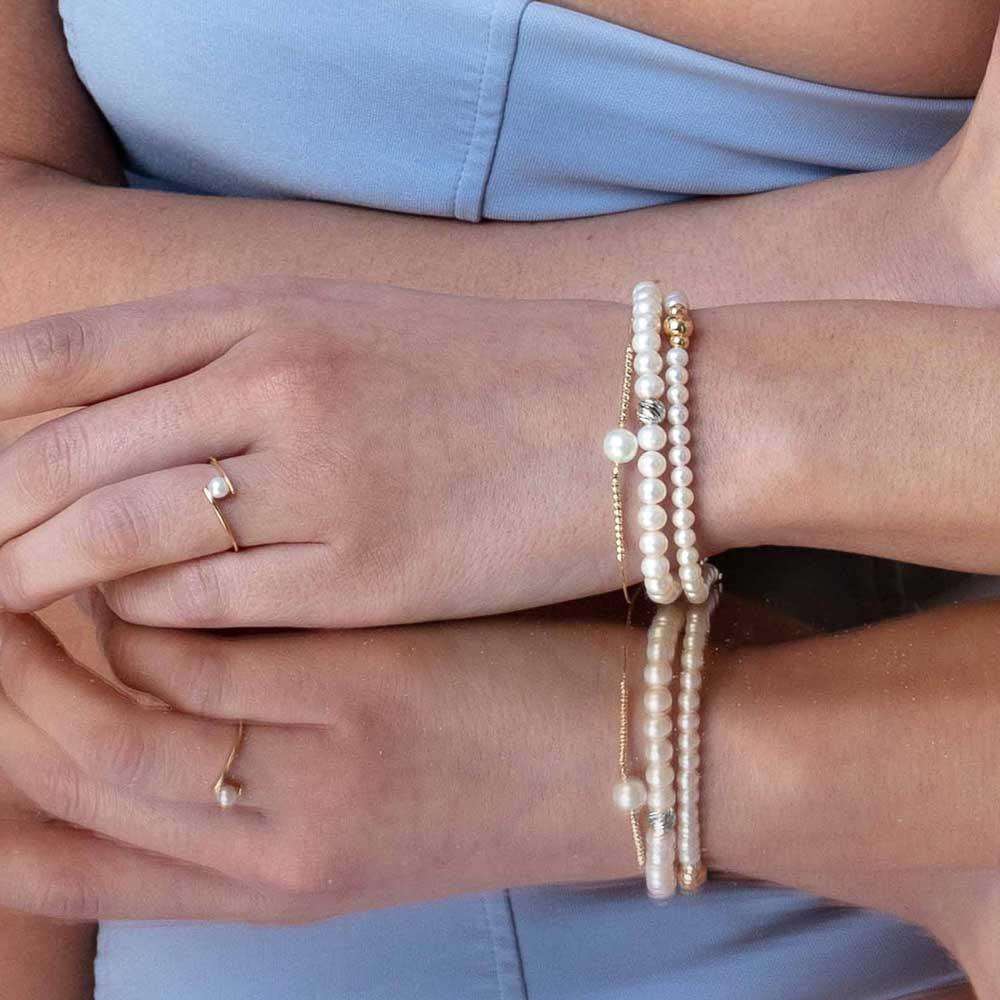
The Glamour line explores the pearl beyond the classic strand. It includes multi-strand necklaces of traditional inspiration, as well as contemporary creations in which the pearl is paired with gold, diamonds, and colored stones in unexpected compositions: pearls suspended on arcs of gold, bracelets where the round form alternates with geometric elements, drop earrings that play on the contrast between a satin surface and the luster of the gem.
The three types you'll encounter most often in the line are worth knowing how to distinguish.
- Japanese Akoya pearls — cultured in saltwater, typical diameters between 6 and 9 mm, very regular shape and mirror-like, almost metallic luster. The quintessential classic strand pearl.
- Freshwater cultured pearls — a wider size range, shapes from round to baroque, tones from white to pink to lavender. They offer creative freedom: this is the category where contemporary design moves most freely.
- South Sea pearls — the most generous diameters, from 9 mm upward, with their characteristic thick layer of nacre that delivers a soft, deep luster. White or in the golden variety.
When assessing a pearl, look in this order: luster (you should almost see your reflection), surface (some marks are always present — it is an organic gem: what matters is that they are not visible), shape, color, and last, diameter. A large, dull pearl is worth less than a smaller, vibrant one. The philosophy of the line, after all, starts here: the pearl is not a «grandmother's jewel» — it is an organic gem that changes its face entirely depending on how it is set.
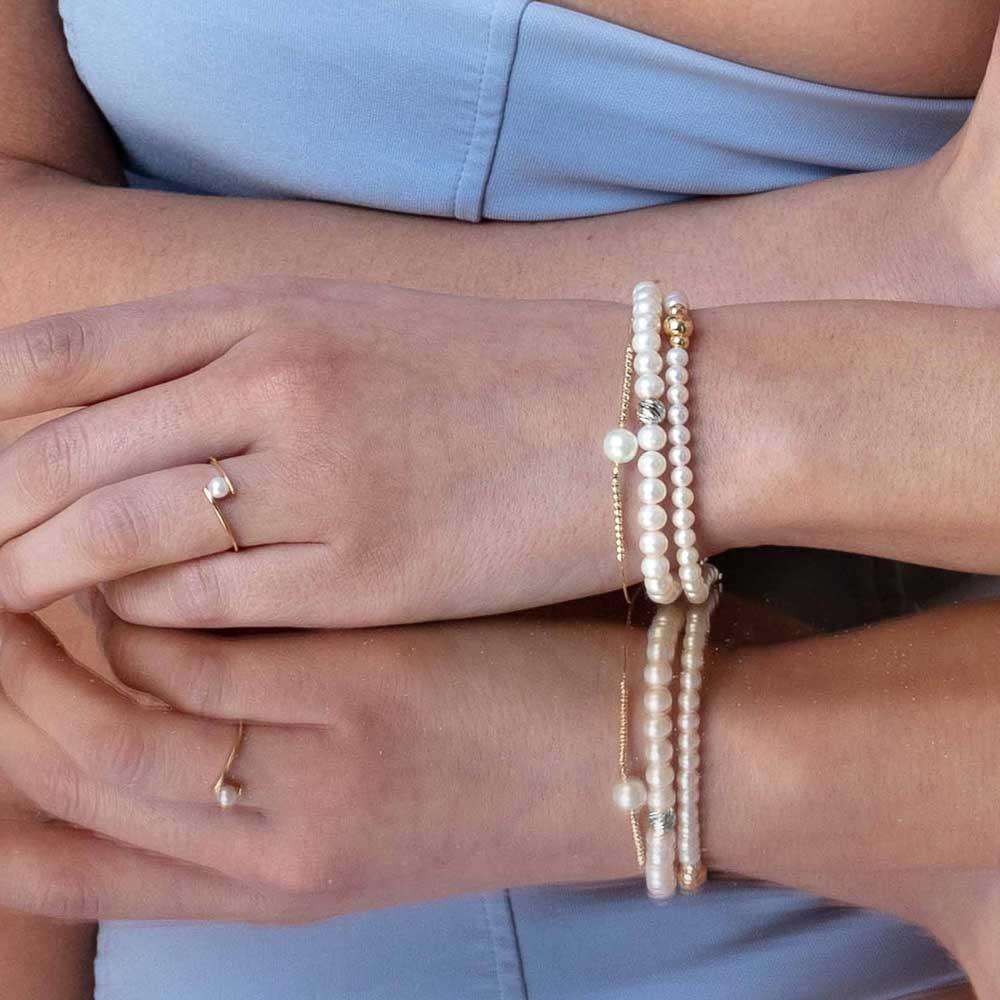
LeLune Diamonds: solitaires, trilogy rings, rivieres
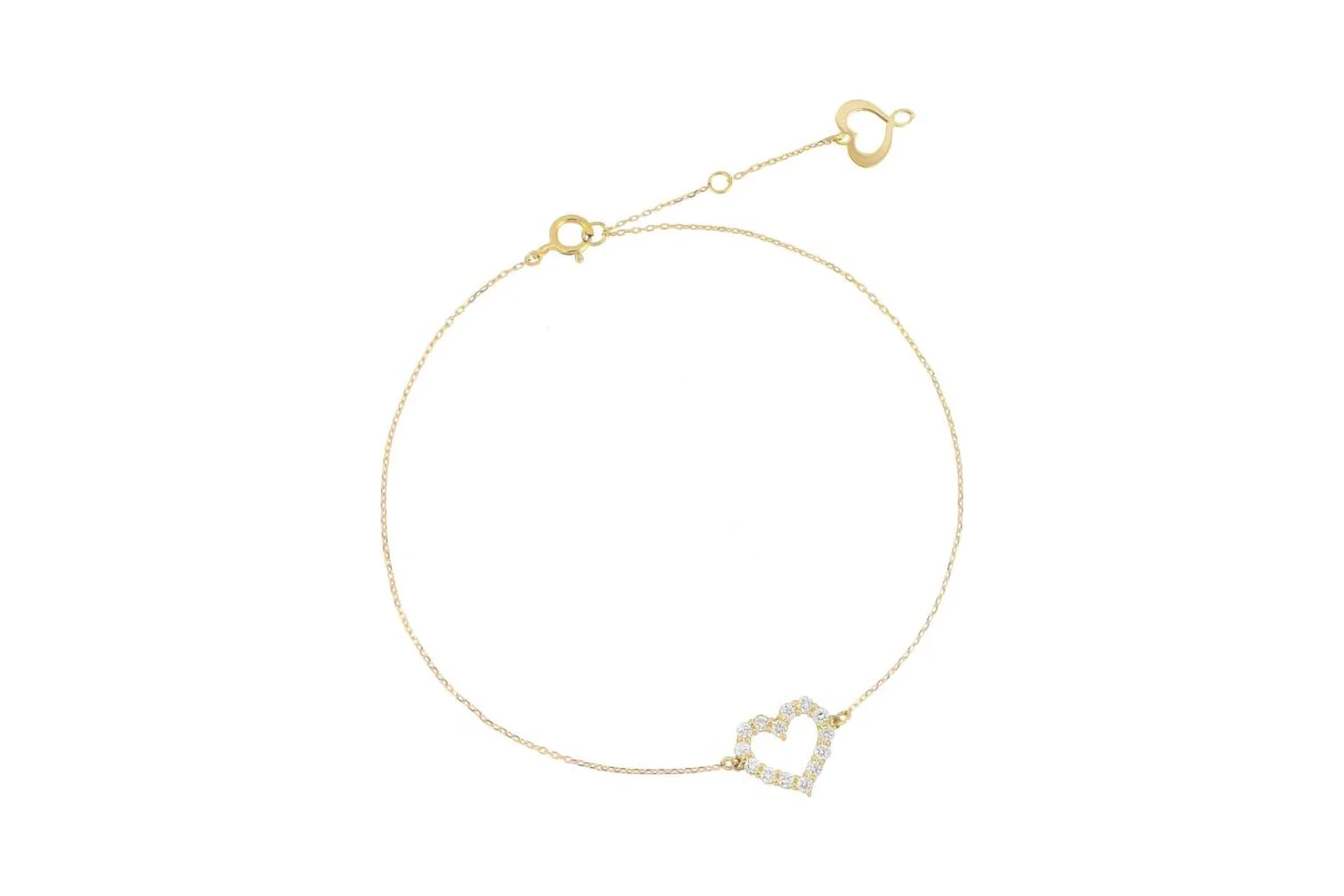
The second line brings the same goldsmithing tradition to the diamond. The repertoire here is that of jewelry classics: solitaires, trilogy rings, rivieres, diamond tennis necklaces, and pave pieces — all designed so the stone sits high and catches light even under ordinary lighting, not only in a store display case.
Before choosing, the four parameters to always have explained to you are the same: carat (weight, not apparent size), color (how colorless the stone is), clarity (presence and visibility of inclusions), and cut — the most underrated parameter and the one that truly determines how much light is returned. On a solitaire, an excellent cut on a slightly lower-color stone often outperforms a theoretically superior stone cut to save weight. On a riviere or a diamond tennis necklace, what matters instead is uniformity: the stones must speak to one another.
Always ask for the documentation that accompanies the piece and keep it with the product warranty: you'll need it if you ever wish to have the jewelry appraised, insured, or altered.
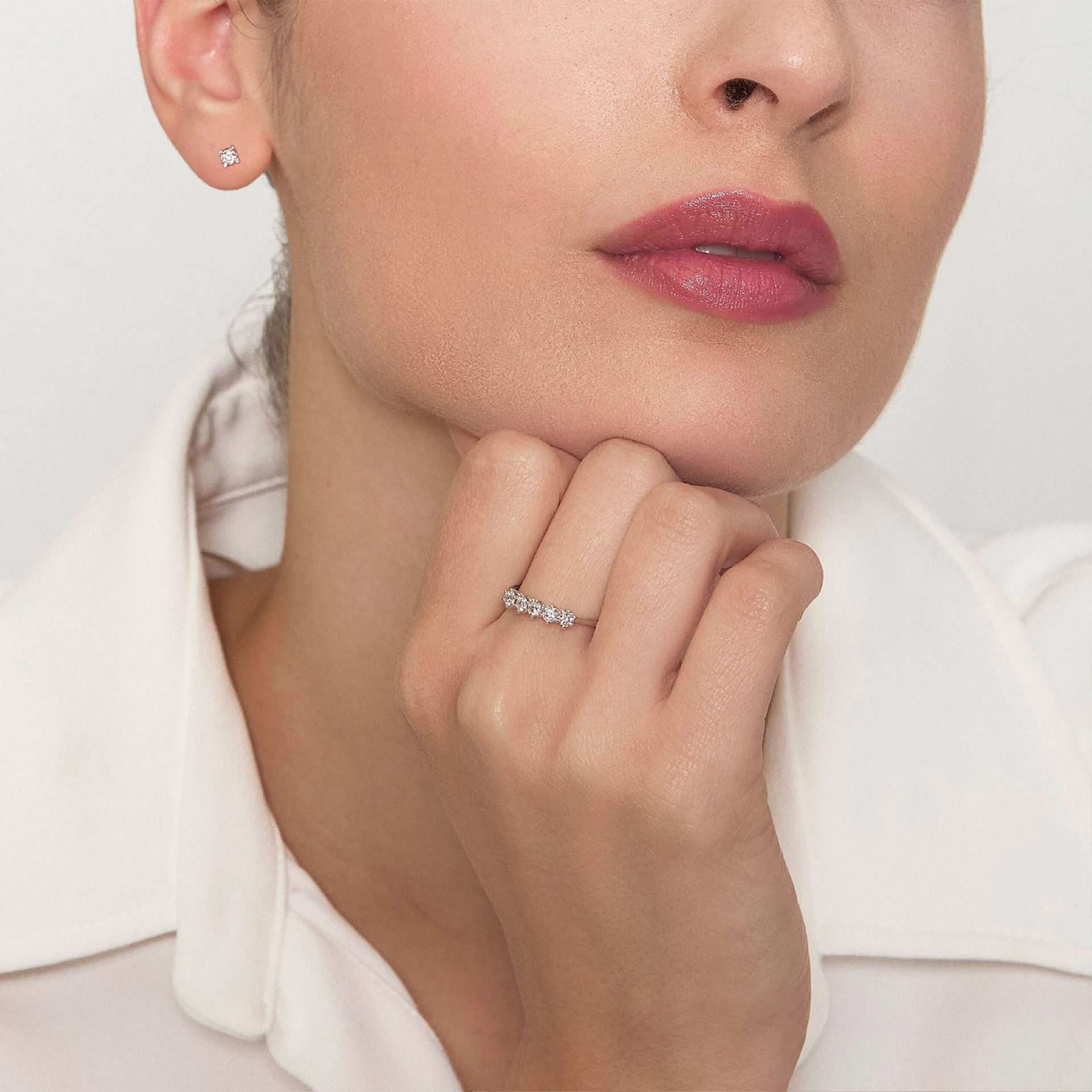
Rings, bracelets, necklaces: what changes in wear
Rings in the LeLune collection range from diamond solitaires to streamlined rose gold bands, to pearl-set designs. A practical note on pearl rings: the pearl is a delicate gem, so a pearl ring is an evening piece or one for quiet days — not for dishwashing or unpacking boxes. A diamond solitaire, by contrast, holds up to daily life as long as the prongs are checked occasionally.
Bracelets are the most versatile category: fine chains with pearl elements, calibrated strands, rigid gold bangles. They can be worn alone or layered. If you stack them next to a watch, keep the watch wrist free of rigid pieces: continuous contact between steel and gold marks both.
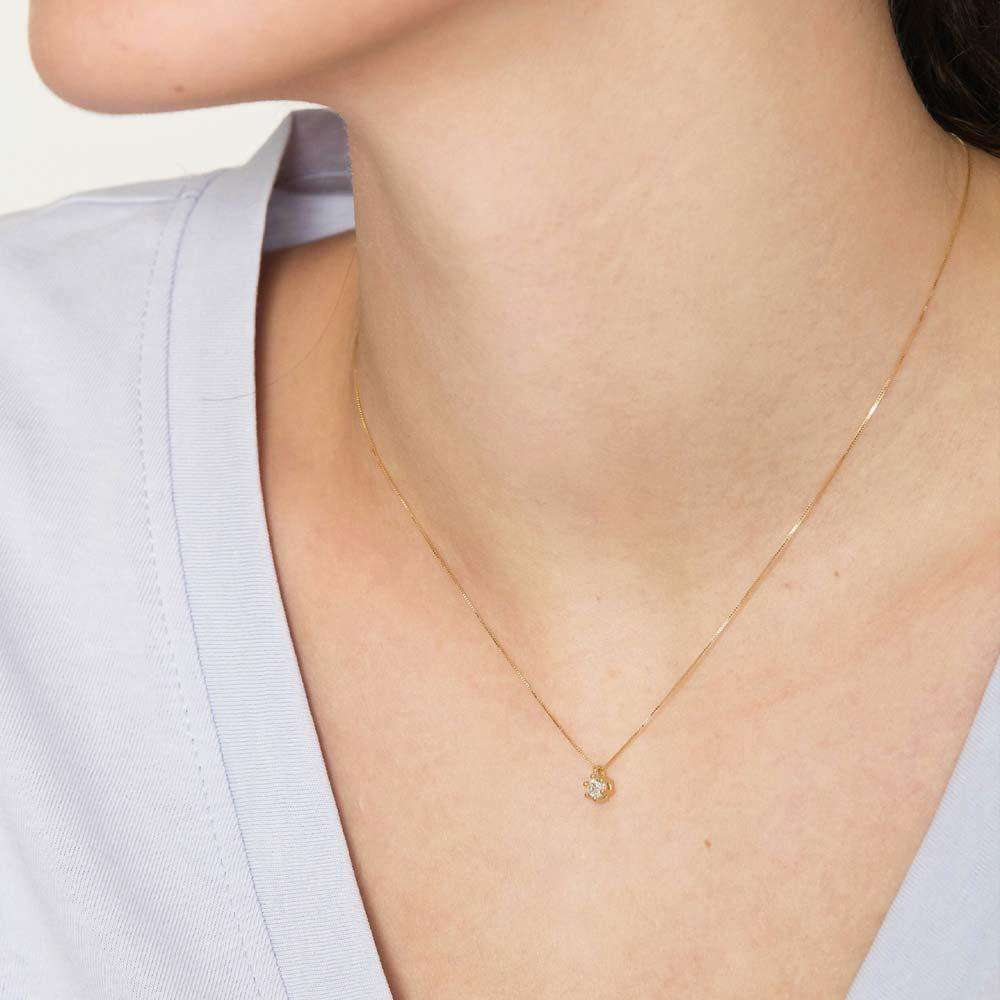
Necklaces are the heart of the line. Pearl or diamond pendants for everyday wear, single and multi-strand necklaces for special occasions, diamond tennis necklaces that look equally beautiful against a high neckline or an evening gown. Here, measurements matter more than style:
- 14–15 in (35–38 cm) — choker, sits close to the base of the neck: calls for wide necklines.
- 16–17 in (40–42 cm) — collar: the most requested length, falls just below the throat.
- 18–19 in (45–48 cm) — princess: rests on the collarbone, the ideal length for pendants.
- 20–24 in (50–60 cm) — matinée: reaches above the décolletage, perfect over sweaters.
- 28–32 in (70–80 cm) and beyond — opera and sautoir: worn long or doubled.
If you're choosing a gift and don't know the ring size, a pendant or a pair of pearl earrings solve the problem entirely: they have no size.
How to care for pearls over the years
Pearls are organic and react to everything they come into contact with. A few simple rules are enough to keep them beautiful for a lifetime.
- Put them on last, after perfume, hairspray, and lotion, and take them off first.
- After wearing, wipe them with a soft, barely damp cloth and let them air dry.
- Never use detergents, alcohol, steam, or ultrasonic cleaners: they damage nacre.
- Store them separately from other jewelry, in a fabric pouch — never sealed in a plastic bag: pearls need a little moisture.
- The thread of a frequently worn strand should be restrung periodically, with a knot tied between each pearl.
Restringing, clasp replacement, and prong checks on a diamond piece are all part of our jewelry and watch repair service: drop the piece off at either store with a receipt, and the work is carried out in our own workshop.
Seeing LeLune in Genova
In Genova we have two stores, at via San Vincenzo 110r and at via Martiri della Libertà 23-25r in Pegli, both fully stocked. The catalog, however, is divided between the two: before visiting, write to us on WhatsApp at +39 010 698 1030 or at [email protected] specifying the LeLune piece you're interested in, and we'll tell you which location carries it and set it aside for you. If a piece is not currently in stock, it can still be ordered.
For pearls and diamonds, we recommend seeing them in person at least once: the luster of a pearl and the behavior of a cut under light are the two things no photograph can fully convey.
Frequently asked questions about LeLune
- Are LeLune and Coscia the same brand?
- LeLune is Coscia's jewelry brand. Coscia is the parent maison, with decades of history in Italian goldsmithing dedicated to pearls and gold.
- Are LeLune jewels made in Italy?
- Yes, LeLune production is Italian. On gold jewelry you will find the metal fineness and the maker's hallmark stamped on the piece or on the clasp.
- What is the difference between Glamour and Diamonds?
- Glamour is the line built around the pearl — Akoya, freshwater, South Sea — also in combination with gold, diamonds, and colored stones. Diamonds is the diamond jewelry offering: solitaires, trilogy rings, rivieres, and tennis necklaces.
- Can a pearl necklace be shortened or lengthened?
- Yes. The strand is restrung, adding or removing pearls as needed, and the clasp can be replaced if necessary. Bring the necklace to either store and we'll assess the best solution together before any work is done.
- How do I find out which store carries a specific piece?
- Write to us on WhatsApp at +39 010 698 1030. The catalog is split between via San Vincenzo 110r and via Martiri della Libertà 23-25r in Pegli, and we'll point you to the right location right away.
Keep exploring
Craft, guides and new arrivals
Subscribe to receive the stories from our magazine, our buying guides and a selection of pieces chosen by our goldsmiths and watchmakers.