Jewelry
What Is a Baroque Pearl?
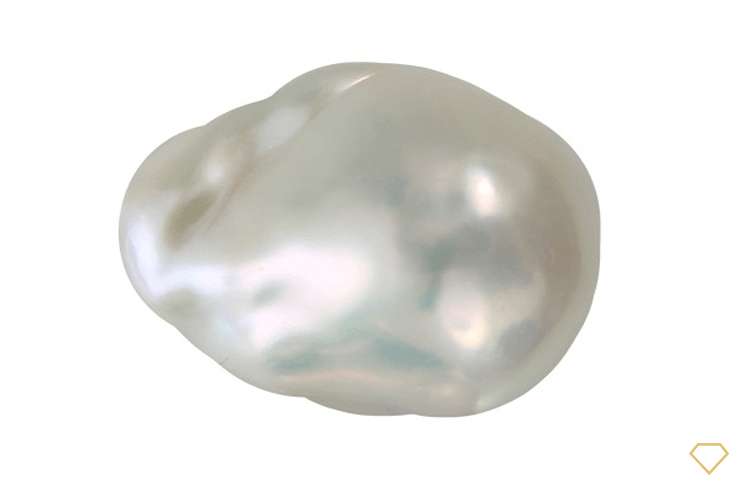
A baroque pearl — also known as a scaramazza pearl — is a natural or cultured pearl whose shape is not perfectly spherical and cannot be classified among the classic, well-known pearl shapes (round, semi-round, button, drop, or oval). A baroque pearl can therefore be defined as a pearl with a free-form, or fancy, shape.
Baroque pearl: yes or no?
In the world of fine jewelry, it is quite common to hear potential buyers ask: Is a baroque pearl less valuable than a round pearl? The answer is not straightforward, as every pearl is unique. This complexity stems above all from the fact that the discussion essentially involves the analysis and comparison of two entirely different gems. That said… Just as there are more or less beautiful round pearls, among baroque pearls there are also specimens of greater or lesser value.
The evaluation of a baroque pearl follows the same criteria as its round counterparts: color, uniformity of nacre, orient (which we might loosely describe as the "vividness of the surface"), and weight-to-size ratio. There are baroque pearls of such exceptional quality that they surpass round pearls of the same size, and conversely, small round pearls so exquisite that they are more prized than large baroque ones. In short: it is incorrect to compare them directly, and it is impossible to give a definitive answer, since within each category there are both "lesser" and "exceptional" pearls — each with its own corresponding value.
White gold ring with diamonds and baroque pearl by Coscia
The Allure of the Baroque Pearl
The irregular and undefined shape of these gems makes them highly prized in the creation of artistic, imaginative jewelry with bold and creative designs. Their very charm lies in their uniqueness: the beauty of baroque pearls is their unrepeatable character. We can confidently say that no two baroque pearls in the natural world are exactly alike in shape, size, color, or orient.
Every jewel created with a baroque pearl thus becomes an exclusively original creation that reflects and enhances its virtues: it is no coincidence that the crafting of a baroque pearl jewel begins, first and foremost, with the selection of the pearl itself — and it is around that pearl that the design unfolds, the gold or silver is shaped, and gemstones and enamels are paired.
A Pearl with Character
As we have just demonstrated, baroque pearls are not second-choice pearls; on the contrary, they express their full beauty through their very uniqueness, with each pearl assuming a shape entirely its own.
In the past, as explored in the article "Pearl, the Sacred Gem Dedicated to Aphrodite," baroque pearls gained prominence precisely because of their "imperfect" character: their lower cost made them preferable to jewelers of the era (from the 15th through the 17th century) over their round counterparts, as they offered the opportunity to create pearl jewelry suited to a wider range of budgets.
The economic factor that led jewelers to favor them made baroque pearls even more fashionable, facilitating their spread throughout the world until the 19th century — at which point the use of the baroque pearl entered a period of decline, almost entirely replaced by cultured round pearls chosen for the creation of uniform pearl necklaces.
The Jewels of Wonder
Nevertheless, the history of the baroque pearl as it flourished around the 15th century deserves a closer look: the widespread availability of the gem, owing to its relatively modest price, quickly elevated the pearl to the preeminent feminine ornament of the age, second only to the diamond. This, however, applied to baroque pearls of small and average size.
The "incredible" pearls — those of considerable size, with extraordinary colorations, uniform surfaces, and an intense orient — commanded tremendously high prices… The immediate consequence? The most significant masterpieces were acquired by the nobility of the great families and placed in their Wunderkammern, or cabinets of curiosities (one need only think of Francesco I de' Medici, Anna Maria Luisa de' Medici, or Rudolf II of Habsburg, to name but a few).
This phenomenon was the exclusive prerogative of baroque pearls, for unlike round ones, these offered jewelers the opportunity to venture into the creation of extraordinary and fanciful jewels, using the forms and colors of mother-of-pearl — the very material of which pearls are composed — as the foundation for their bodies.
Gold brooch with baroque pearl bust and gemstones
Unfortunately, the number of antique jewels featuring baroque pearls that have survived to the present day is scarce: those that passed through the hands of private individuals from ordinary families have been lost over time (owing to the "perishable" nature of pearl, less durable than mineral gems), and only those preserved within the most renowned collections have reached us — bearing witness to the balance that once existed between fashion and jewelry, between personal adornment and the ethical and aesthetic values of beauty and elegance in life and in custom.
Baroque Pearls in Modern Jewelry
Today, baroque pearls occupy a central role both in classic fine gold jewelry and in silver fashion jewelry. The distinction between fine jewelry and fashion pieces is closely tied to the quality of the pearl: prized South Sea or Tahitian pearls are preferred for fine jewelry, while smaller or Fresh Water pearls are typically chosen for fashion-forward pieces (if you wish to learn all the differences between the various types of pearls, we recommend our Guide to Japanese, Chinese, and South Sea Pearls).
Pair of white and rose gold rings with diamonds and baroque pearls by Coscia
Create Your Own Baroque Pearl Jewel
Has reading this article sparked a desire to create your own baroque pearl jewel? Do you have a design and wish to present it to an expert for a complimentary quote? You can do so right now: contact the experts at Cicala and begin crafting your own exclusive masterpiece today.
© Photos: Wikipedia, Coscia.
Jewelry with Baroque Pearls


Continue Your Journey into Pearls
Would you like to see pearls in person? Discover the pearl necklaces and jewelry curated by the master goldsmiths at Cicala, Genova.
Craft, guides and new arrivals
Subscribe to receive the stories from our magazine, our buying guides and a selection of pieces chosen by our goldsmiths and watchmakers.